How’s mental health in the film and TV industry? Professionals weigh in
The mental health of producers, directors and other film industry professionals is about more than just their individual experiences. According to the Canada Media Fund's documentary series Mental Health in Focus, it’s also about workplace dynamics, organizational culture and ways of collaborating.
Taking care of one’s mental health is often thought of as an individual responsibility — learn to manage your stress, recognize signs of burnout, develop your resilience. Conversations around mental health are essential, and occupy a growing place in today’s culture, including in the film and TV industry.
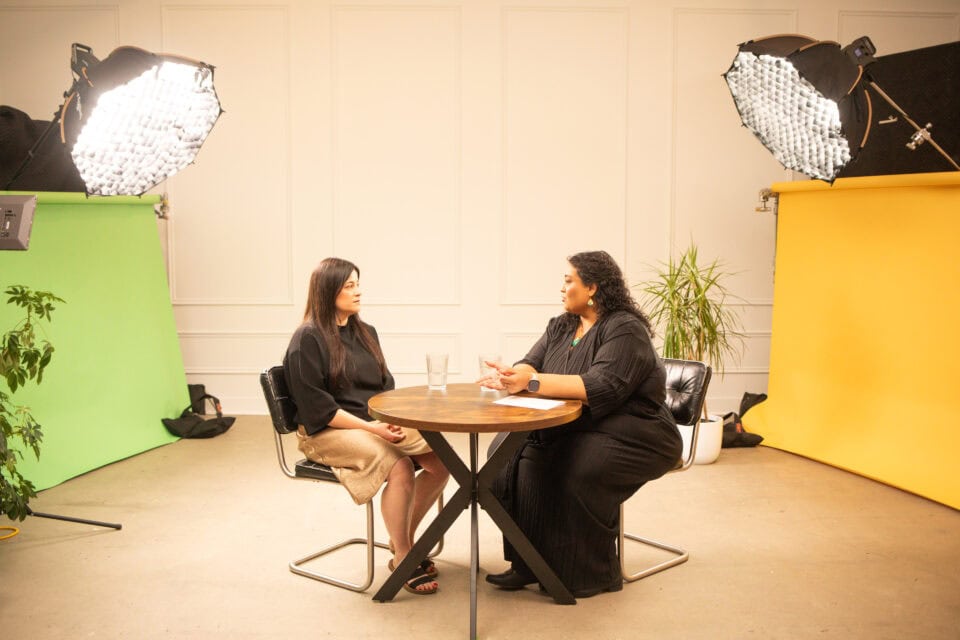
In dedicating the fifth season of the Canada Media Fund-produced video series Lights, Camera, Inclusion to mental health, we interviewed nine people with various roles in the industry — production, direction, intimacy coordination, visual effects, camera operation, set design and content creation. Despite the range of roles, the same issues recurred — isolation, invisible responsibilities, work pace, balancing professional and personal lives, the weight of representing a community, and the need to create more accessible environments.
But beyond reporting observations, the conversations also suggested ways of doing things differently.
Watch the video series Mental Health in Focus
Overcoming isolation
“It’s an industry where producers are entrepreneurs as well as being the leaders of creative teams,” says Mylène Augustin, producer and co-founder of Inaru Films. “A producer has to project the image of someone who’s strong, who can take care of any situation. But there are moments when we’re at home and say, ‘I don’t know how we’re going to be able to do it.’ But that’s not something we can communicate to our teams.”
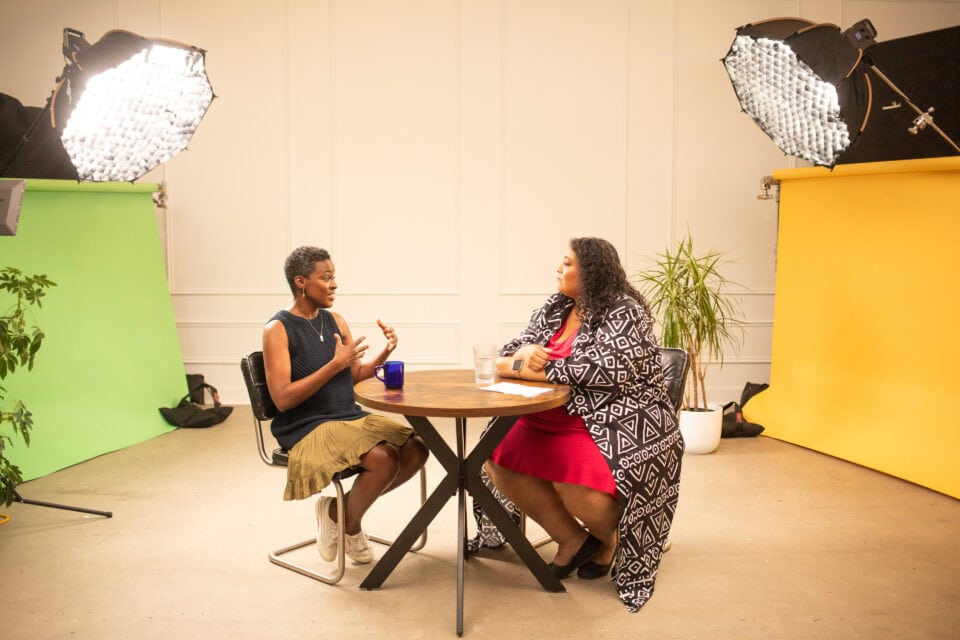
For Augustin, one strategy is to turn to other producers who face the same challenges and discuss difficult situations together, rather than managing them alone.
Daniela Mujica, a producer at Productions Ocho, chose to collaborate with producer Eric Idriss-Kanago’s production company, Yzanakio.
“I don’t think I would be where I am today if I had run my own company by myself in isolation,” says Mujica. “Our cooperation is so important and helps us break the isolation of a producer who has to make very important decisions. We often need a shoulder to lean on, too.”
Isolation is also an issue for intimacy coordinator Jen Viens. On set, Viens is often the sole person tasked with creating a safe space for actors and crew.
Viens suggests the role should be integrated into the project from the beginning, providing the time to build trust. “You’re a one-person department, and then you’re the only person on set who’s making space for everyone…. Everyone shows up with their own story and their own life, and you never know how things are going to affect people. It’s a lot to carry.”
Advocating for diverse perspectives
Philipp Wolf, a visual effects producer and advocate for including neurodivergent people in the industry, suggests work environments would benefit from including a larger diversity of perspectives.
“The difference of perspective is what makes us human. Whether you realize it or not, you’re already working with neurodivergent people. So, it’s about allowing people to do what they do best and creating an environment where everyone can participate by including a diversity of perspectives in the decision-making process.”
For Wolf, the priority is to create spaces where psychological security is guaranteed, and where workers can share their needs and express how they’re feeling without fear of reprisal.
First camera assistant Yasmine Amor, who has worked extensively with professionals of diverse abilities, agrees. “We have to think about our industry in a way that includes all these people, because they have things to contribute on creative and logistical levels…. This also offers an opportunity for us to review our ways of working, and question our work rhythms and operations, which don’t really align with a healthy work-life balance,” she says, adding such a review would be beneficial for everyone.
The weight of representing a community
For director and screenwriter Maryse Legagneur, the recent increase in opportunities for creators from historically underrepresented groups allows stories that have been missing from screens to be seen.
But this creative freedom can come with a tradeoff. “Personal stories are often going to retraumatize us, and depicting this traumatizing experience can cause suffering,” she says.
Conscious of the burnout that affects the film industry’s Afro-descendant women in particular, Legagneur wanted to contribute to their healing by creating La Maison d’Erzulie.
“I made the choice to go live out in the country, two hours from Montreal, and I created a welcoming studio there to offer a retreat. I like the word retreat. Withdrawing oneself, placing oneself in a benevolent space. And these aren’t performative retreats…. I’ve had the opportunity to host three women who have stayed here, which was very beneficial for them, and for me as well.”
According to Xavier Watso, an animator and social media content creator, the emotional toll is real. Even after telling the story of his grandmother, who survived the boarding schools, dozens of times, the emotion is still strong.
“I’ve given this speech more than 60 times,” he says. “And each time I tell her story, I cry. I can’t help myself.”
Despite the abundance of hateful comments on social media (that he’s decided to ignore), the platform has become a way for Watso to meet other Indigenous creators, share experiences, and build a large, supportive community that didn’t exist before.
Julie O’Bomsawin, a producer and founder of Kassiwi Média, is working to ensure that Indigenous stories get told. Her mission is to create an Indigenous talent pool, which requires — apart from technical skills — time, mentorship and a respectful environment.
“We have to find a way to create flexibility within projects so people are well-treated when they’re learning,” she says.
How to make workplaces healthier
The solutions proposed by the nine professionals interviewed require collaboration between producers, better planning, integrating certain support roles from a project’s start, more flexible norms, better-supported training experiences, and environments designed to welcome a broader diversity of realities.
“The hours are long. And at the same time, that’s what pays,” says Paul-François Sampson, a set technician. “So, that’s always the compromise we have to make. Do we want to make money or have a life?”
He believes other approaches are possible — better planning, increasing teams when necessary, and shortening workdays.
“I know we’re in an industry that needs to make money,” says Amor. “But is money the only way to measure return? Or is it also measured by the pool of talent we create, the social cohesion, the strength of the culture we develop, the feeling of belonging, and the ways in which young people are going to advance towards their futures? I think that’s an important form of wealth as well.”