Heated Up for the Slo Pitch: Interview with Bell Media’s Justin Stockman
By Irene Berkowitz, Senior Research Consultant, Strategy & Business Intelligence
With different generations preferring different viewing platforms, how do demographics and demand impact content commissioning? For Canadian broadcasters, what drives a decision to launch on linear versus streaming?
To explore these questions, Perspectives interviewed Bell Media’s Justin Stockman, Vice-President, Content Development and Programming. Stockman heads English TV programming for CTV, Crave, and English-language specialty channels. Stockman famously greenlit 2025’s Heated Rivalry. Next up is Slo Pitch, set to debut on Crave later this year.
Here’s our conversation:
Perspectives: Justin, thank you for taking time to chat with us in your very busy year. Last week, you were in Miami, on a panel at NATPE.1 How was it for you, especially with the Heated heat?
Justin Stockman: In the past, I’ve been the person on the panel who people forget is there. This time, there was a lot of talk about Heated Rivalry and I was trying to turn the conversation to make sure it was more inclusive. The Canadian in me felt guilty we were such the centre of attention!
P: Your panel was called “The New Plot for Scripted,” with executives from Britbox, Hallmark, and ABC/Hulu. How did it go? What is the new plot for scripted?
JS: The takeaways are that taking risks is good. And leaning into not pleasing everyone. Be true and authentic to the show you’re making, which will deliver a bigger audience. All of that was uniformly agreed upon. Also, pouring a ton of money into a show doesn’t mean it’s going to work. Something that’s really good quality and delivers on what it’s supposed to be seems the key. Those are the takeaways. Heated Rivalry obviously checks all those boxes.
P: When creators Jacob Tierney and Brendan Brady pitched, what drove your greenlight? Was it the team’s track record? The underlying IP, the Rachel Reid books? Audience demographics?
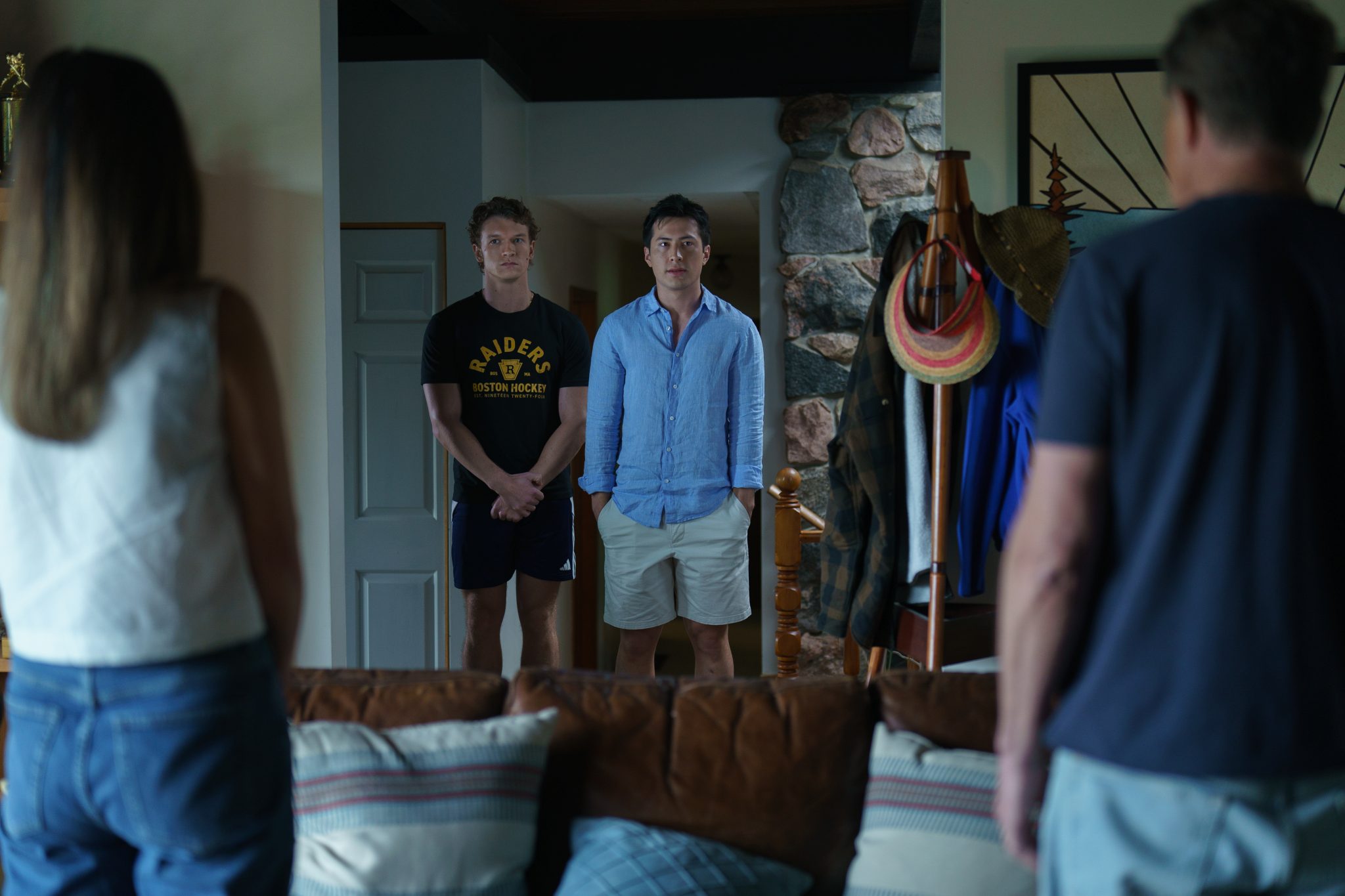
JS: A bit of all of it. Our development team is supposed to sniff out the exciting idea that will get people talking and also assess whether the people we’re working with can execute properly. We see over a thousand pitches and proposals per year, with about 65 projects moving forward to greenlight. When our team gets excited, it’s usually a good indicator. They’d had an initial meeting with Jacob about whether, if he optioned the books, might we be interested? They did some research. We were familiar with the romance genre because we do Sullivan’s Crossing. But the male-male romance subgenre was something that, as the team dug in, they realized maybe we’d tapped into something special. Secondly: We knew we could depend on Jacob and Brendan to deliver on what they said they would, because we’ve worked with them before.
P: Your two-part approach seems classic: “Commission a great story, well told.” Did any other panelists at NATPE have a different take? Sounds like maybe there is no “new plot for scripted”?
JS: I think it’s a refined focus. You need good IP, but it has to be adapted in a way that will work as a TV show and is executable. With whatever money you have, make it.
P: 2025 was a hat trick. CanCon scored three global hits in one year, all renewed: Heated Rivalry (Crave/HBO), plus Empathie (Crave/Canal+), plus North of North (CBC/Netflix). Has Canada joined the club of world-class content and soft power exporters? They say Downton Abbey waved the flag for Britain. Are we there yet? What would you say is our Canadian brand? What’s your big takeaway for 2025?
JS: I would include Sullivan’s Crossing in your list too because it was number one on Netflix in the US and number three on Netflix globally. But we don’t really know yet, if we’re there. We are taking advantage of a moment in time where it’s hard to get a yes in Hollywood. With disruptions and mergers, decision-making has slowed down. A lot of companies are frozen. While they sort out their new structures, we’ve been able to swoop in. We have momentum and we’re figuring out how to fund things, sometimes with the CMF, using our envelope in a strategic way. We are willing to take risks on projects that are hard to get a yes on right now. I don’t know if that’s a brand. Sullivan’s Crossing isn’t especially risky, but it’s true to what it is—a soapy, glossy, romantic show—and we have tried not to mess with it. We know that audiences are there, so it’s worked. Heated Rivalry is very specific. We didn’t try to water that down either and it worked. With Empathie, we took the same approach with challenging subject matter but delivered it in a comedic format. What these shows have in common is we’re letting the show be what it’s supposed to be—not messing with that.
We’re trying to use this moment to keep the momentum going. They can’t all be Heated Rivalry, but now that we have everyone’s attention, how do we keep it and consistently ramp up?
– Justin Stockman
JS: We do think we’re having a moment. We’ve been aggressively taking meetings, starting a year ago, in LA and in London, meeting with commissioners and studios to say, “work with Canada, we’re ready.” Almost everyone has cut back on commissioning volume. Bell Media hasn’t. We are growing. We’re continuing to commission at a very high level. We’re soliciting Canadians all over the world. They don’t have to live in Canada. We can figure out together how to access the benefits of working in Canada and harness some of this amazing global talent that happens to be Canadian. We tell them don’t think of Canada as where you come to make cheap stuff—think of it as premium. To have a few really big breakout hits by the end of the same year we started these conversations is really exciting. We’re trying to use this moment to keep the momentum going. They can’t all be Heated Rivalry, but now that we have everyone’s attention, how do we keep it and consistently ramp up?
P: I hear Crave’s next up is Slo Pitch, a 10-episode comedy about a queer female softball team, and beer. Based on a web series by showrunners Karen Knox and Gwendolyn Cumyn. What drove the yes? Will Slo Pitch keep up the momentum?
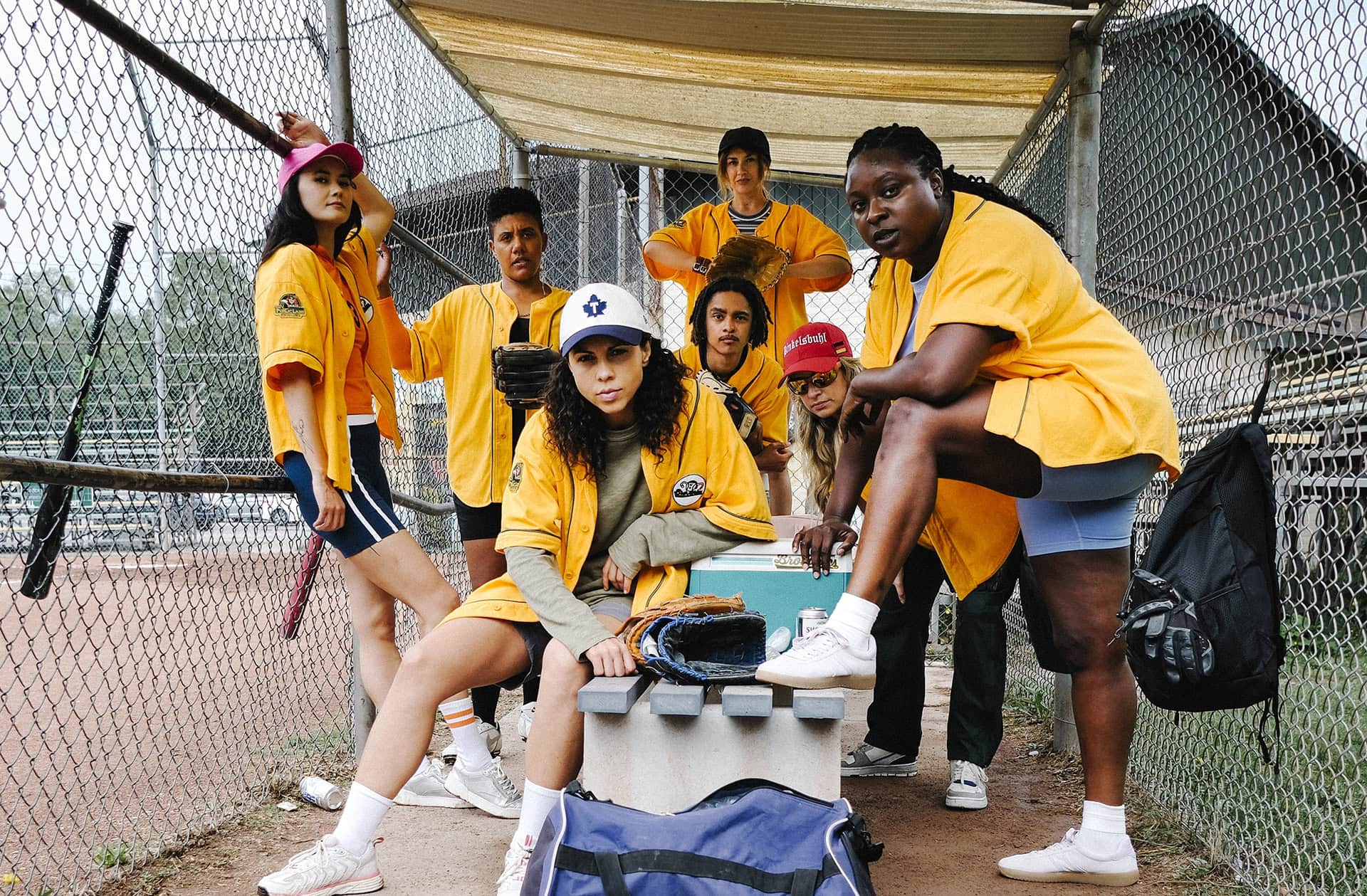
JS: Even though it’s about being queer in sports, it’s a very different vibe—mockumentary style, leaning into being a big-C comedy like many workplace comedies. Again, we thought it was unique and would get people talking. Because of Heated, it’s getting a lot of early buzz. The opportunity is now, when people are excited about what we’re doing.
P: Shall we talk linear TV? Data shows there are more unscripted commissions than scripted in Canada on linear, where the average audience is about two decades older, about 60 versus 40. As an example, Amazing Race Canada is the number-one show on linear.2 When you commission, do you factor in demographics? Was there ever a plan to premiere Heated Rivalry or Empathie on linear?
JS: What we’re doing now is putting everything on Crave. Anything we commission, if it has a window on CTV, must also perform on Crave. CTV still has a massive audience, as does Noovo in Quebec. Crave is the future, where everything comes together. Amazing Race performs really well on CTV because there’s an appointment viewing aspect to it. But its numbers grow every year on Crave. This year, we put it on Crave the next day and didn’t wait till the end of the week. We know we won’t cannibalize our CTV audience. Let’s just get more people talking about the show. We tend to anchor unscripted formats on CTV because they have great brand partnership opportunities. Tons of clients line up to be a part of Amazing Race Canada. The CTV airing helps monetize the cost and increase viewership.
JS: With scripted, Sullivan’s Crossing does really well on CTV, but its viewership grows every year on Crave. We’re finding different people in different places who want to watch shows. Heated Rivalry or Empathie, because of the content, would be challenging on linear; you’d have to cut a lot or censor language. For Heated, we weren’t going to edit out any sex scenes or swearing. We wanted it to be what it was meant to be. It had to be on streaming, where we’re not restricted by the same rules as on traditional broadcast.3

P: As you know, there are financial downsides for Canadian broadcasters when a show is on streaming, because the CMF funding model includes an audience performance factor, calculated only on linear audiences.4 A massive hit on Crave, like Heated Rivalry, doesn’t help Bell Media’s CMF funding envelope. It’s been like this for a while. Other Crave hits like Letterkenny, Shoresy, and Late Bloomer do not trigger extra funding because program-level data on streaming is not publicly available. How does Bell Media feel about this?
We’re hoping streaming performance becomes a factor in how the envelope is allocated. It’s a quickly growing part of our business. The future of Canadian content is going to be in streaming.
– Justin Stockman
JS: We’ve proven we make good use of our CMF allocations, and we definitely took a hit this year. We’re hoping streaming performance becomes a factor in how the envelope is allocated. It’s a quickly growing part of our business. The future of Canadian content is going to be in streaming.
P: Folks may not realize this but the CMF, and the industry at large, do not have access to program-level streaming data. Yet the CMF knows where audiences are. So, for the first time in the 2024–25 Annual Report, the CMF showcased Parrot Analytics, which uses audience demand as a proxy for streaming data by combining publicly available metrics including web searches, social media posts, and more.5, 6 First, audience metrics were calculated based only on linear with Numeris data, which the CMF is authorized to use for the envelopes. Next, audience was calculated with Parrot data. The result was striking. Letterkenny, which didn’t appear on the traditional top 10, became the number one show. Shoresy, also missing from the top 10, was number two.7 Neither show increased Bell Media’s envelope because they only stream on Crave. Is a streaming launch more important than your broadcast audience credit?
JS: We have to figure something out, because this is the future, especially if we’re taking more risks on the types of shows that sell internationally; a lot of them are streaming originals. Heated Rivalry is the best poster child for that. When we allocate our envelope, we are obviously trying to be strategic about where we put our CMF dollars so our envelope will grow. At the same time, we also want to put it on shows where it’ll go the furthest to get the show get made. We’ve got to get there some way. We still intend to put CMF dollars into streaming shows and hope the CMF can figure out how to credit that.
P: Any sneak peek on what comes after Slo Pitch—2027 and beyond?
JS: We’re excited about I Kill the Bear, Jared Keeso’s next series, an original concept for a comedy. Also super excited about Yaga, a drama series based on an award-winning play. The scripts are amazing. I think both series will sell not just in Canada, but all over the world. Some of our upcoming shows are already in talks to be sold or have been sold before they even exist because there’s excitement over what we can do. We need to sustain this momentum to get more Canadian content to the world.
P: Absolutely! The Canadian creators and producers of these shows are our mutual clients. The CMF just completed research that shows a strong majority are focused on engaging global audiences. Does this data resonate with pitches you receive? What guidance do you give?
JS: I would say to producers: “Pitch us really good shows you truly believe in—that you think will cut through, will be creatively excellent, and are producible.” We can figure out how to fund it, get it made, and deliver on everything the producer wants it to be.
P: Looking ahead even further, will the love of long form survive the younger generation who loves video games and YouTube? How to commission for these Gen Alphas, now up to 13 years old?
JS: We have done some short form and will likely do more. When they really like something, they’ll watch long form. We’ll go wherever the audience is. Always open to innovate and try new things.
P: Final question: What excites you the most about this moment?
JS: We were out there telling everyone what we could do in Canada, the “we” being Canada. It’s great to have proven it so quickly. With Empathie and Heated Rivalry, the pressure’s on to keep delivering, but we’re up for the challenge.
P: Is the pressure for success getting to you?
JS: No, it’s exciting. We’re putting the pressure on the producers. Bring us your best stuff.
P: Thank you. Your work is opening doors for Bell Media and the whole industry.
JS: It’s a team effort here. Thank you.
Interview conductd February 10, 2026. Edited for length and clarity.
FOOTNOTES
- The week before we spoke, Stockman was on a panel at NATPE (National Association of Television Program Executives) with executives from ABC/Hulu, Hallmark, and Britbox. The topic was “The New Plot for Scripted.”
- Casemore, Jamie. “Broadcasters unveil top Canadian linear, streaming titles of 2025.” Playback, January 21, 2026, https://playbackonline.ca/2026/01/21/broadcasters-unveil-top-canadian-linear-streaming-titles-of-2025.
- Canadian linear broadcasters voluntarily adhere to codes set by the Canadian Broadcast Standards Council (SBSC).
- The CMF Broadcaster Envelope Program funds are allocated to broadcasters at the beginning of each fiscal year based on past performance in commissioning and airing linear content projects.
- “Built Different: CMF Annual Report 2024–2025.” Canada Media Fund, September 2025, pps. 118–119, https://cmf-fmc.ca/document/2024-2025-annual-report/.
- Parrot Analytics is an audience measurement service that gives insights into television series and films through “demand expression,” which indicates how strongly audiences are engaging with a title. For more information, see “Follow the Eyeballs: How Audience Measurement Tools Are Adapting to Digital Platforms” in this issue of Perspectives.
- Both shows were Crave originals and were made by the same team as Heated Rivalry. Note that Shoresy‘s creative team also included Jared Keeso.