The Second Life of “Nirvanna the Band the Show”
As Nirvanna the Band the Show the Movie heads to the Canadian Screen Awards, viewers are seeking out the original TV series. Unfortunately, they can’t find it.

From its Midnight Madness screenings at last year’s Toronto International Film Festival to its theatrical run this past February, to its sold-out merch pop-up and eight Canadian Screen Award nominations, Nirvanna the Band the Show the Movie has become one of the year’s buzziest Canadian screen stories.
It also did what most filmmakers who create films spun from TV series hope for — sent viewers back to the original show. Sixteen episodes of Nirvanna the Band the Show aired over two seasons on Viceland in 2017 and 2018, and were then available on CBC and CBC Gem, but have since disappeared.
For Matthew Miller, who produced both the series and film, the renewed interest has been obvious. “The movie really connected and resonated with people and they want more,” he says.
However, in Canada, the series is almost impossible to find.
A New Generation Finds Matt and Jay
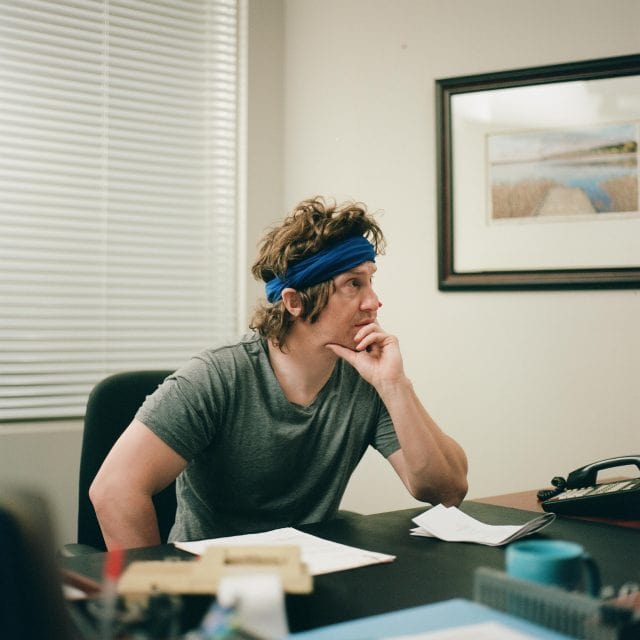
Created by Matt Johnson and Jay McCarrol, Nirvanna the Band the Show follows fictionalized versions of the pair — two best friends in Toronto who call themselves Nirvanna the Band and are intent on a single, absurd goal: play a show at the famed Rivoli, even though they’ve never written a song. The mission becomes a string of escalating stunts designed to get the venue’s attention, usually with disastrous results. The movie expands on the premise by turning their long-running quest into a time-travel story about friendship and ambition set in 2008.
Viewers looking for the show go beyond those who watched on Viceland or CBC. Miller says the movie has brought in some who were too young to have encountered the series when it first aired.
“There’s a whole new generation of fans who weren’t really cognizant when we were making that other show,” Miller says of the series that received funding from the Canada Media Fund (CMF) in its second season.
The film’s 2008 setting has helped. For viewers in their early 20s, that period is close enough to recognize and far enough away to feel strange. The clothes, the streets, the phones, the pre-algorithm texture of the world — all of it has become part of the appeal.
“What they’ve connected to in the movie, which we were not really anticipating, is this kind of nostalgia for this bygone era,” he says.
Miller says viewers in their early 20s have responded to the simplicity of that world, before social media and surveillance culture changed the way people behave around cameras.
The producers receive messages every day from fans trying to find the show but there is no clean, legal pathway for Canadian audiences to watch it right now, says Miller. The team is working on options, though, including a physical release of the series that’s scheduled for later this year and will be released by the team’s distribution partner, NEON.
Demand Outstrips Access
According to data compiled by global research company Parrot Analytics and provided by the CMF, Nirvanna the Band the Show generated average audience demand 16 times higher than the Canadian market average between May 10, 2025, and May 10, 2026, making it the fifth most in-demand Canadian-originated comedy series during that time period. Leandra Greenfield, a CMF data analyst, says that level of demand is surprising because sustained demand at that scale is usually concentrated among long-running, widely distributed Canadian comedies with strong platform support.
In the Parrot data, during that same period, Nirvanna the Band the Show sits just behind some of the country’s biggest comedy show standouts, like Shoresy, and only slightly below CMF-funded hits such as Schitt’s Creek and Letterkenny. Those shows benefited from broad exposure, strong distribution and years of cumulative audience awareness. Nirvanna is different in that it’s more of a cult hit with a fanbase that’s doing most of the heavy lifting.
Greenfield describes the series as “overperforming” relative to its accessible footprint. In terms of demand, it is behaving more like a widely available Canadian comedy than a hard-to-find one.
Greenfield says demand for the series rose around the film’s theatrical release in February 2026. Shortly after the release, audiences began “talking about, watching and actively seeking out the series,” she says.
The data can’t tell us whether those people were new viewers or returning fans, but Greenfield believes it was likely a mix. The film’s theatrical release and visibility from the South by Southwest (SXSW) Film & TV Festival, where it had its world premiere in March 2025, also helped push the property beyond its core fanbase.
Greenfield notes that demand spikes for Schitt’s Creek and other Canadian comedies were largely driven by expanded distribution, streaming access and audience awareness. Nirvanna’s surge is likely tied to the change in format. The movie created fresh attention and viewers started looking for ways into the comedy’s larger universe.
However, we should note that Parrot’s demand figures are not viewership numbers. They measure audience interest through signals such as search, social activity, ratings, open streaming activity and peer-to-peer activity, then express that demand as a multiple of the market average.
Keeping Canadian Titles Available
Miller says the show’s current lack of availability was not a deliberate scarcity play. The rights lapsed.
For him, the situation points to a larger challenge facing older Canadian titles after their first window. If shows are going to remain available, he thinks broadcasters need to see value in licensing them again, and producers need a clear reason to pursue second-term deals.
The other challenge is rights literacy. Once a show has aired, producers still need to understand what rights they control, what has expired and what can be relicensed.
“What honestly happens so often is that producers don’t fully understand the rights that they have or don’t have, or the scope of the rights or the terms of their original distribution agreements,” Miller says. “People are sitting on rights that they don’t even know that they have.”
For smaller producers, the work of staying on top of their rights can pile up quickly. “Companies come, companies go, they close, they go bankrupt, the terms lapse,” Miller says. “It’s almost like a full-time job just keeping up with the library of titles.”
Canadian Comedy and the Outside-In Effect
Nirvanna has never tried to sand down its Canadian identity. The show was built around Toronto, with the Rivoli as the prize and Queen Street as a key part of the story’s backdrop. Matt and Jay’s schemes depend on the city feeling grounded and specific.
That specificity has not stopped the title from travelling. Parrot’s data shows interest outside Canada, including in the U.S., Australia and the U.K., now that the film has created potential new viewers.
Asked whether there is a gap between audience interest and platform appetite for Canadian comedy, Miller points to Canada’s long history of exporting funny people and shows, such as Trailer Park Boys, Letterkenny and Schitt’s Creek.
But he says Canadian comedy often gets a domestic boost once it has been embraced elsewhere. “Canadians are way more likely to watch content made in Canada when they know Americans are watching it, which is a pity,” he says.
Part of that comes down to marketing. U.S. platforms and distributors can spend at a scale Canadian companies usually cannot. “The Americans market the material, and they can pay to market it in ways that maybe we can’t in Canada, just based on the numbers,” Miller says.
The show has done the difficult part of becoming relevant again. Now the business side has to catch up.