What if our fictional heroes were more eco-friendly?
You’re watching a movie and a character throws his apple core in the compost bin before grabbing a reusable water bottle and hopping on his bike. Some screenwriters feel showing such actions on TV or in the movies can make a difference in the climate fight, and they think it’s possible to go even further.
“I like to call it planet placement, instead of product placement,” says Maureen Mondin. She’s talking about slipping good environmental habits into TV and cinema in a subtle way.
“Dialogue like, ‘Oh, it’s hot!’ ‘Oh yes, damn climate change!’ That’s not going to work, we can all agree,” she says, laughing.
The script editor and content producer offer training on environmentally friendly approaches to filmmaking, starting with the screenwriting stage. The sessions are organized by Rolling Green, the program that supports audiovisual production with its ecological transition. Since November, Mondin has trained 26 industry professionals in Montreal, and two more sessions are planned for the coming months.
She points to both subtle and more overt approaches screenwriters have used to speak green. On the one hand, there’s Florence Longpré’s Empathie, with its protagonist who uses bike-sharing, carpools and has a menstrual cup. On the other hand, there are films like Anne Émond’s Amour Apocalypse (Peak Everything), about a man who suffers from climate anxiety, that place the environmental crisis at the heart of the story.
Mondin also talks about the main character in Sophie Deraspe’s Bergers (Shepherds), who is disillusioned with his life in advertising and wants a different path. “His search for meaning is subtly mentioned but not stressed,” she says.
Author and screenwriter India Desjardins is part of this green wave. A devoted ecologist since her teens, she remembers being moved by an article about the lack of environmental content in Québécois TV series, highlighted in a 2022 report by the Conseil québécois des événements écoresponsables (CQEER).
The report analyzed 20 episodes from Québécois series. Several items deemed environmentally unfavourable were listed, including 11 SUV appearances and 31 single-use objects (straws, bags, cups, dishes). The CQEER recommended showcasing electric vehicles, active transportation, and reusable objects instead.
In Desjardins’ own film 23 décembre (Two Days Before Christmas), the writer insisted that characters take public transportation and not wear leather or fur. One character even takes the train between Montreal and Quebec.
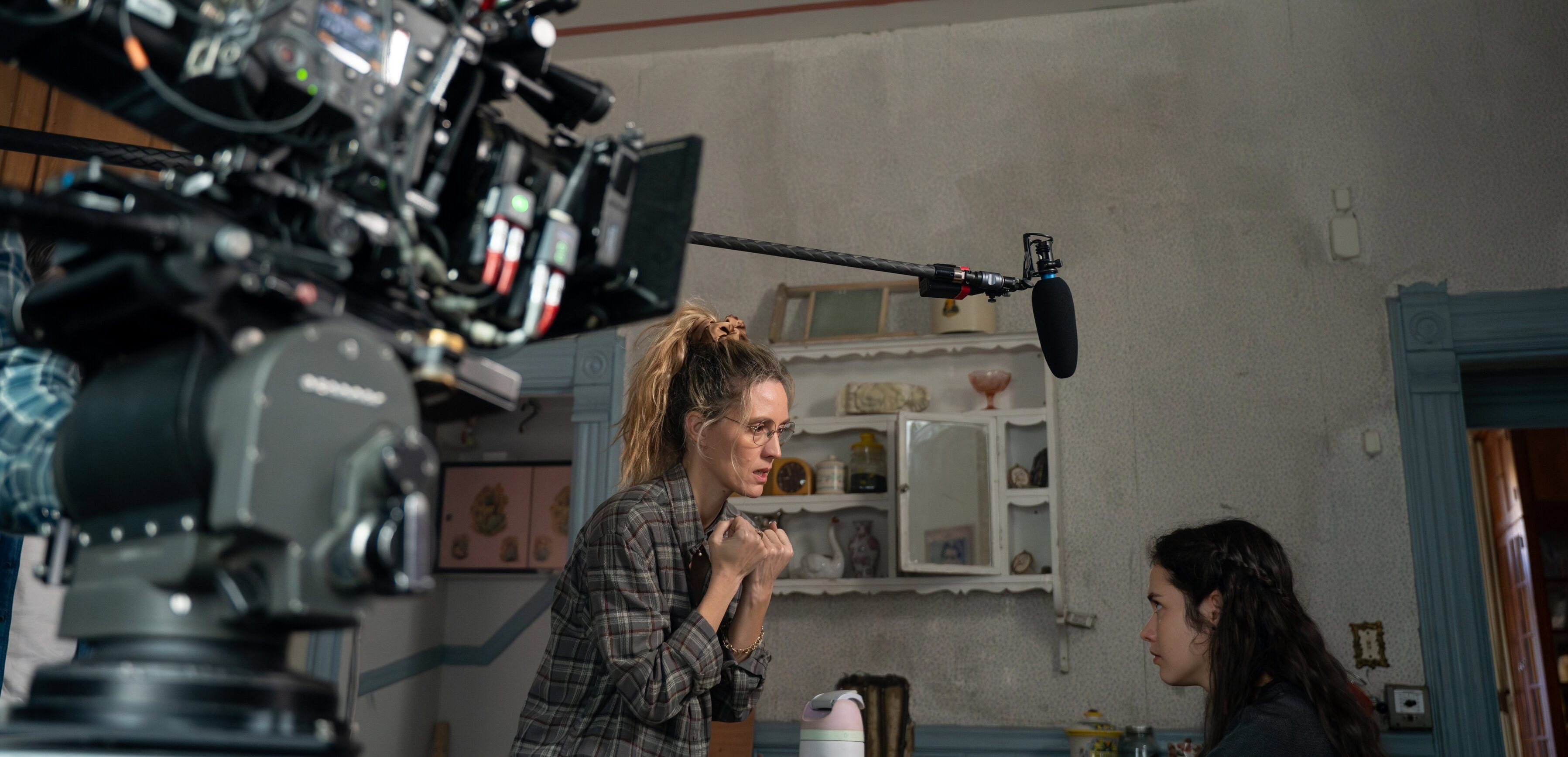
Desjardins goes even further in the upcoming Hantée (Haunted), a comedic fantasy film that opens October 9. There’s compost on the counter, no meat, they cook tofu for supper. “It’s written into my script. Because if you don’t write it, it won’t necessarily be there. I wrote it so it’s integrated into their daily life, without being moralizing about it,” the writer explains.
Drawing from true stories
Some artists may feel uncomfortable with the practice, fearing their stories will become too preachy and simplistic. Mondin understands. But, in her training, she offers a different perspective. “The world is changing,” she says. “That’s a reality. Our scripts, our stories have to change with it.”
Desjardins was inspired by a true story for a subplot in Hantée. The film is about a family who buys a haunted house, but there’s a side story about a group of kids leading a fight to shrink the teachers’ parking lot in order to create a larger schoolyard. “I read about that in the newspaper and I just fell in love with these young people. I incorporated it into the film, in homage.”
Mondin also cites an episode from the Arctic-set series North of North, in which a funeral is cancelled because of an early ice melt. “It’s not the subject of the episode at all. But we’re in the Far North. That’s part of the characters’ daily life!”
Writers can also inspire audiences to simply do better. “The first step is banning harmful actions,” says screenwriter/producer Mélanie S. Dubois, who has led the Eco-Responsible Film Sets Management training at the Institut national de l’image et du son (INIS) for several years, one part of which is dedicated to eco-friendly practices on screen.
She recalls giving advice to a screenwriter who wanted their character to throw junk-food packaging out a car window. “You’re encouraging that type of action, rather than thinking about how you can display anger in a different way,” says Dubois.
Leading by example
Why show environmentally friendly practices on screen? To normalize it, insist all three women interviewed. “What we see on screen, in our ads, and in our culture, has a huge impact,” says Mondin.
We can draw a parallel to cigarettes. Smoking on screen encourages tobacco consumption in real life. According to a recent study by the American non-profit Truth Initiative, young people most exposed to cigarettes or vapes on screen had almost three times higher intentions to vape or smoke themselves the following year.
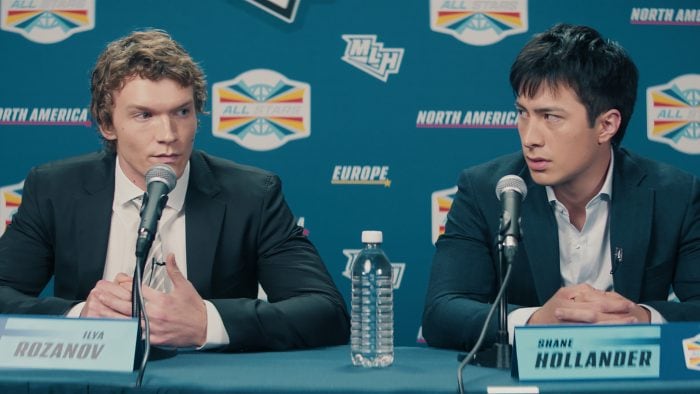
Mondin also draws a comparison to Jean-Marc Vallée’s 2005 film C.R.A.Z.Y., which changed attitudes toward homosexuality and, more recently, the series Heated Rivalry, which did the same within the world of professional hockey. She also points to our increased efforts toward diversity on screen over the past decade, saying, “Is it perfect today? No. Have we advanced? Yes.”
Desjardins thinks certain narrative reflexes are starting to feel dated, like the archetype of the annoying eco-friendly person everyone hates, or only mentioning vegetarian food as the butt of a joke. “Creators who are offended, who say it limits their freedom…I think it’s more limiting to do things as they’ve always been done.”
Finding creative solutions
Desjardins doesn’t think all screenwriters have to write environmental solutions into their scripts. She’s choosing to see this quest as a new creative path and is willing to make the additional effort in planning. After all, you can’t book a VIA Rail train car at a moment’s notice.
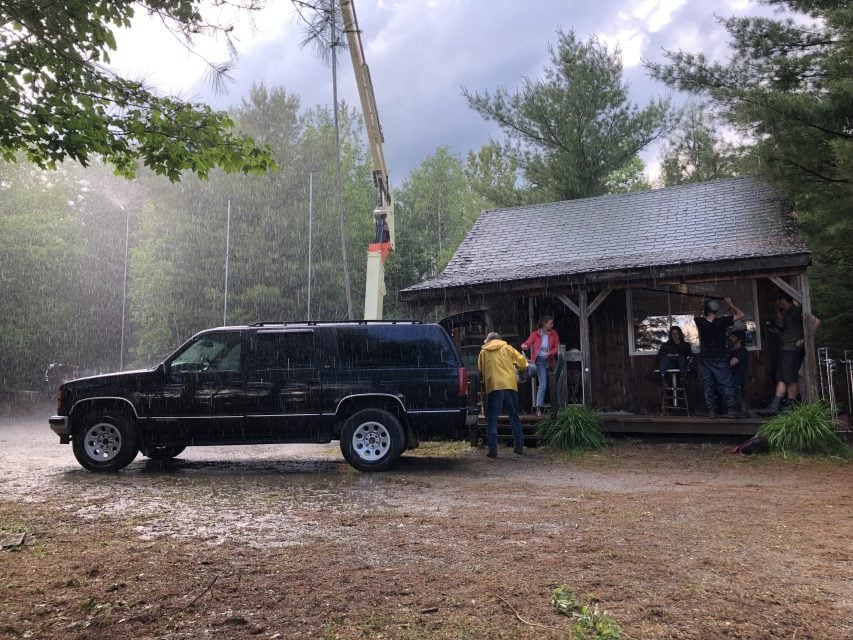
While everyone agrees the story should never be sacrificed for the sake of the environment, there are always solutions to be found. The film adaptation of the novel La déesse des mouches à feu (Goddess of the Fireflies) comes to mind for Dubois — the rain intensifies throughout the story, breaking into a storm near the end of the film. To waste less water, she explains, director Anaïs Barbeau-Lavalette chose to drop the group scenes and tighten up the shots, the type of decision that can be written right into the script.
Dubois is adamant, the environmental transition concerns everyone, and everyone can find ways to help. “What are the steps? The characters are going to tell us. It’s film by film. It’s scene by scene,” she says.
She’s currently working on the animated film The Legend of Eliak, which follows a girl who’s the last human on Earth as she tries to bring the planet back to life. Dubois promises it won’t end on a depressing note. “I want my viewer to leave the movie theatre and go to bed that night saying, ‘I’m capable of changing the world.’”