Why social media is the perfect fit for Adam Paradis’ short films
Adam Paradis writes, directs, produces and stars in short films and vertical videos destined for YouTube, TikTok and Instagram, and — at just 20 years old — makes a living doing it. Now with financial support from the Canada Media Fund’s Digital Creators Pilot Program, he’s getting some help with his next project.
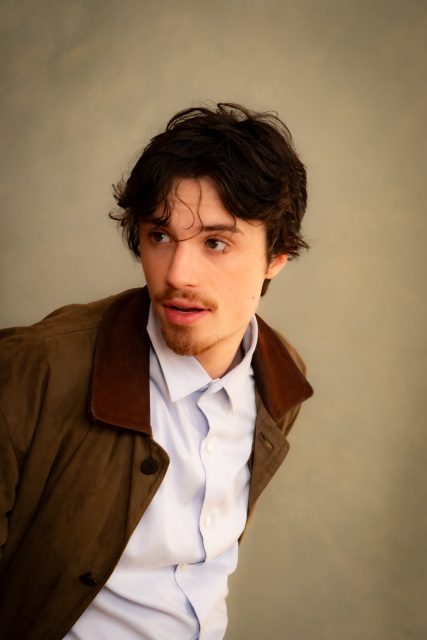
Adam Paradis was just 10 when he used his father’s camera to film his first video. Like all his friends, the young Quebecer dreamed of becoming a YouTube star.
“I was born in the 2000s. I grew up with YouTube much more than other media like TV,” says the content creator who, to be precise, was born in 2005.
Unlike his friends, Adam created his own channel and made consistency his trademark. To this day, he maintains a strict production schedule, creating a short film of about 10 to 20 minutes every two months and regularly posting short clips of about two minutes each on TikTok and YouTube. He does all of this under the slightly modified moniker Adam Paradisio, rather than Paradis.
A true one-man band, Paradis writes the films, shoots them, plays the main characters, and often does the editing.
Raising awareness and sharing his message
Paradis’ films frequently draw on dramatic techniques while tackling social issues like bullying, homelessness, war and the environment in a way that’s both serious and imaginative. At this year’s Gala Influence Création, which celebrates Quebec’s digital content creators, he won Video of the Year (Long Format) for Le Soldat (The Soldier), a 37-minute film that reflects on the cruelty and absurdity of war. He also took home the Francophone International Influence award at the show.
Paradis has nearly 2 million subscribers on YouTube, and more than 680,000 on Instagram. On TikTok, 3.7 million people follow him. His business is going so well he launched a second YouTube channel in June, simply called “Paradisio,” where he shares his more daring short films.
“I don’t use the social-network format to make inferior films,” says the young director. “I use the format to tell stories in a different way.”
Paradis received financial support from the Canada Media Fund (CMF)’s Digital Creators Pilot Program (DCPP) at the beginning of this year. These funds will allow him, for the first time, to hire a filming/editing team and rent professional equipment.
The film he plans to make with the funds is inspired by one of his previous vertical videos on TikTok, in which three soldiers from different time periods (all played by Paradis, a device he often employs) have a conversation. Shooting is scheduled to start this summer.
Vertical versus horizontal
Vertical videos, also called microseries or microdramas, are increasingly popular with viewers who watch on their phones. In spring 2026, Télé-Québec jumped on the bandwagon by releasing La mascotte du chaos, an 18-episode vertical microseries for teens on TikTok.
“It’s a way of looking at the phone that comes so naturally, it’s not going to change unless we invent a triangular telephone,” jokes Paradis.
Rarely exceeding two minutes, vertical videos are filmed specifically for cellphones in a 9:16 format. Paradis frequently shoots them for his TikTok channel and says the format lets him compose tight, static shots that emphasize the dialogue.
- Read more: Verticals on the rise
“I find there’s a style to static shots,” he says. “The eye isn’t drawn elsewhere as much. It’s already so stimulating to be in vertical with subtitles and constantly changing shots, so you really focus more on the character, on what’s being said.”
Paradis hasn’t completely abandoned the wide shots associated with television. He uses them for his longer short films and says vertical and horizontal modes can work nicely together.
“We have to stop thinking that one is going to take the other’s place,” he says. “I think people will always appreciate watching a long story shot horizontally for 30 minutes, an hour, or even two hours, but the fact remains that while they’re on the go, people will continue to appreciate a shorter format.”
Making a living from social media
After having spent more than half his life as a YouTuber, Paradis considers it to be “like any other job.” His revenue comes from YouTube views and ads for products on his channel. Last year, he says, he made $70,000. Not bad for a self-taught creator with a high school diploma.
Paradis reinvests almost all the money he makes into his video production. For his next short film, he’ll continue to invest his own money combined with the financing from the CMF. The difference is this time he’ll be able to concentrate on writing, directing and his performances, and leave the rest of the production side to his team.
“I want to be able to produce something more ambitious than usual as I’m also going to finance part of it,” says the content creator. He estimates it costs close to $20,000 to make a short film.
Paradis is proof that social networks are no longer just a springboard to traditional media. Some content creators are happy right where they are.