‘Cinquième acte’: Ayana O’Shun and Bianca Bellange’s modern-day ‘Romeo and Juliet’
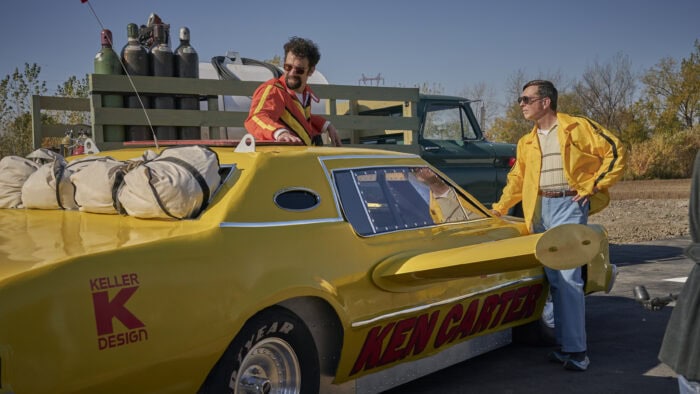
Inspired by the controversies surrounding the plays SLĀV and Kanata, which made headlines in Quebec eight years ago, sisters Ayana O’Shun and Bianca Bellange created the feature film Cinquième acte, a love story in which politics meets intimacy.
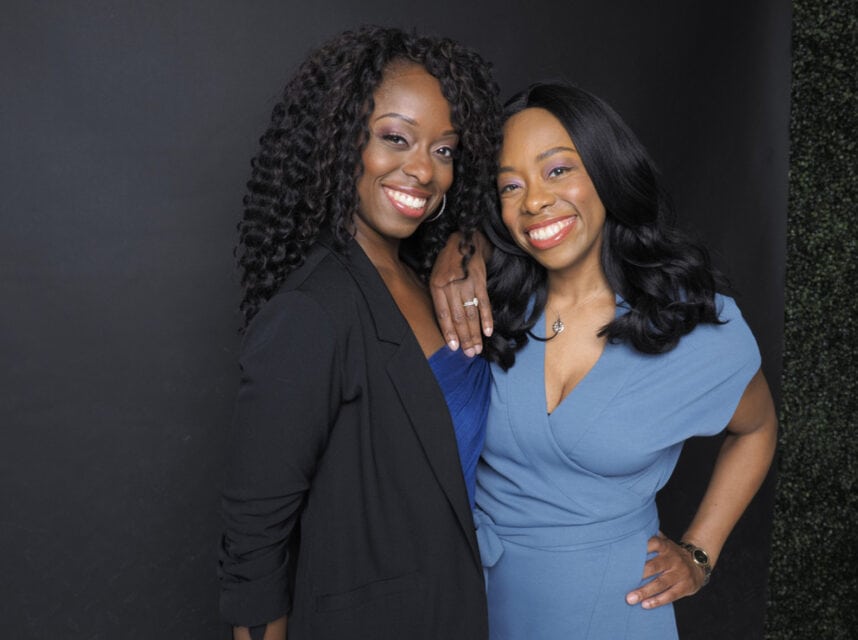
In a classic five-act tragedy, the fifth act is the denouement, or resolution, when the chaos has passed and order is restored. Hence the title, Cinquième acte (Fifth Act), of the fiction debut from sisters Ayana O’Shun and Bianca Bellange. The feature film follows their acclaimed documentaries Le mythe de la femme noire (The Myth of the Black Woman) and La fête des pères (Father’s Day).
Cinquième acte—which was co-written and produced by the sisters, with O’Shun also directing and appearing in the film—had its world premiere at Cinemania this month before it hits theatres in February.
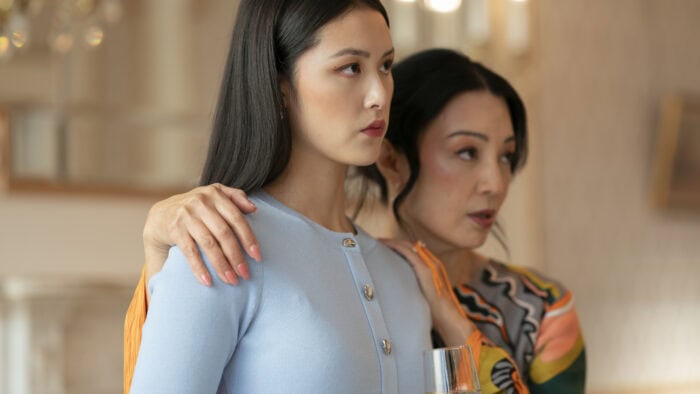
The story follows a mixed-race couple, a Black man (Pascal Tshilambo) and a white woman (Jeanne Roux-Côté), whose relationship is impacted when they are caught in the middle of a controversy that rocks the theatre world.
“We often refer to it as a modern-day Romeo and Juliet, but which ends on a brighter, more hopeful note,” says O’Shun. “This is a film about the transformative power of love and art.”
The film was inspired by the 2018 debates about cultural appropriation that surrounded two Robert Lepage plays—SLĀV, which cast mostly white actors as African American slaves, and Kanata, which was about Indigenous/settler relations in Canada, but was created without meaningful input from the Indigenous community.
Cinquième acte explores the aftermath of these debates, asking the question: What happens once a controversy has died down?
What inspired you to tackle a subject that can be so controversial and divisive?
Ayana O’Shun: We began writing the screenplay in 2018, when those questions were front and centre for us: Who is allowed to tell which stories? What is an authentic story? What is cultural appropriation? Then the SLĀV and Kanata controversies came along. We wanted to find a way to address these events, not as an intellectual debate, as we saw all over the place, in newspaper articles and such. Through a love story, we reach a universal perspective on the question. These are two people with completely opposite views on these issues, but who love each other passionately. So, we explore whether it’s possible to reconcile love and personal convictions.
Bianca Bellange: A few years after the whole SLĀV controversy, Robert Lepage and his detractors, who were mostly from the Black community, had a conversation. Once the dust settled, it was less of a battle or a confrontation, and more about understanding and dialogue.
Until now, your joint projects were documentaries. What stood out most from this first experience in fiction?
A. O.: For a documentary, we have a crew of five or six people. Here, there were nearly a hundred. It’s night and day. This makes the writing much less flexible than for a documentary. With a crew of five, you can change direction along the way and make adjustments. That’s almost impossible with a big crew, not only because of the cost, but because of the number of actors, the locations and the length of the shooting days. Artistic freedom is still there, but in a much more rigid structure.
We quickly learned that our initial screenplay was too ambitious for the budget we had. So, as screenwriters, we had a few days to ask ourselves: What is the essence of the message? What can we cut? It was an extremely eye-opening and beneficial exercise for the film. For instance, there was an exterior scene where we needed a hundred extras, which we modified so that there would be only one person. It’s a protest scene, and that person protesting alone proves to be much more evocative.
In your projects, intimacy is often related to politics. How does this relationship unfold in your film?
A. O.: As a producer, filmmaker and screenwriter, I present things that happened to me in real life, but that also reflect the political landscape. We know that, currently, all over the world, the far right is on the rise. It’s the kind of thing that I can’t ignore as an artist.
My wish is for my films to be a small drop in the ocean of change, of progress; for us to stop seeing the other as different because of their religion, their gender or the colour of their skin. The great thing about film is that it allows us to recognize ourselves in somebody else. And that is how, for me, intimacy meets politics.
B. B.: What’s interesting is that, among the people who have already seen Cinquième acte, several have told us that it’s a film about reconciliation. It’s because no one is entirely wrong or right, in both the love story and in the political context in which it is placed. The tone of the film is not accusatory. Instead, it encourages listening and understanding.
You worked on this project for more than eight years. On the eve of its release, would you say that the story and its themes are still relevant, maybe even more so than when it was created?
A. O.: Absolutely. I think that the controversy around Robert Lepage’s plays was one of the first times we heard both camps speak out publicly in Quebec. It is clear things have changed a lot since then, in the political, economic and artistic spheres.
On the other hand, society is more polarized today than it was in 2018. But our film’s goal is not to depolarize. It aims to create bonds and conversations, to name things openly, without pretense. That is something that we included in the film—different groups speaking out in the public space. And when these voices clash it leads to something akin to a fifth act, where everything blows up before we can move forward.
How would you describe women of colour’s place in the Quebec audiovisual industry now, in comparison to when you started out?
B. B.: There are more of us, that’s for sure. It’s nice to see. We discover the work they do and the success they have. We follow each other on Instagram. I believe that the CMF's Program for Racialized Communities contributed greatly to making these voices heard. Before, we were told to contact already established production companies for our projects. Yet there were many female producers of colour who were ready to do it themselves; all they lacked was the opportunity.
Today, audiences are open to other points of view, to other ways to tell stories. But they are much more demanding, especially since the pandemic. The quality of online content is very high. But to create competitive content, from a technical standpoint, you need funds.