Mina Shum’s ‘Whatcha Want’ chooses joy
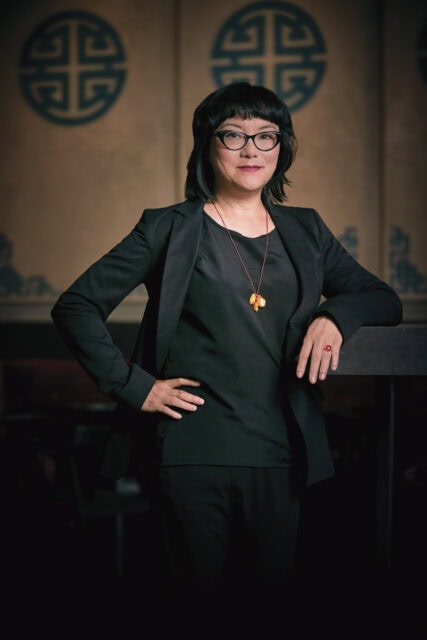
Veteran writer/director Mina Shum returns to the big screen with Whatcha Want, her love letter to female empowerment, community and the joy of dance.
Spend any time with Mina Shum, and you can’t help but be carried away by her enthusiasm.
Enthusiasm for making films, her hometown of Vancouver, and life itself.
The veteran writer/director burst onto the Canadian film scene in 1994 with her debut feature Double Happiness, which starred a young Sandra Oh as a woman trying to keep her traditional Chinese father happy while she pursued an acting career.
It was an exuberant and personal film that announced Shum’s arrival alongside a host of filmmakers, including Atom Egoyan, Patricia Rozema, Jean-Claude Lauzon, Deepa Mehta, Bruce McDonald and Robert Lepage, who transformed the 1990s into a golden age of Canadian filmmaking.
It’s been almost a decade since Shum’s last feature film, 2017’s Meditation Park, although she has been working non-stop in TV.
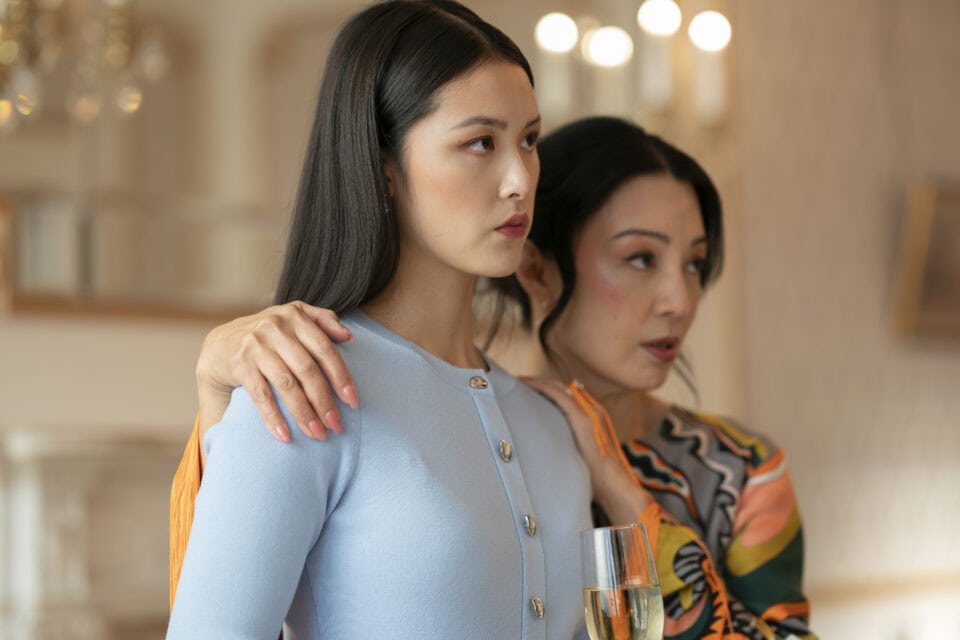
She returns to the big screen with Whatcha Want, which debuted at the Toronto International Film Festival earlier this month and stars Isabella Wei as a young wife who moves from Hong Kong to Vancouver. Her rich husband (Hugh Tran) remains in Hong Kong, and when she realizes he is being unfaithful she joins a local dance studio and begins a journey of empowerment.
Shum was in her Vancouver office when we chatted by phone.
Your team has said the elevator pitch for Whatcha Want is Crazy Rich Asians meets Flashdance. Is that accurate?
Yes. And one of my mixers, a man, said it's a dance movie that’s a scathing indictment of the patriarchy. The only thing is the elevator pitch doesn't tell you that the story is kind of deep.
Can you give us a brief synopsis of the film?
A young newlywed, played by Isabella Wei, is transplanted to Vancouver from Hong Kong by her billionaire husband. All her dreams come true; she was a middle-class girl raised by a single mom. But when she gets here, she realizes that she's living under his rules, which includes this age-old tradition of mistresses. She finds out that he's just going to do this, and at the same time she sees a dance studio across the street and goes in.
You know, it's not like she's not oppressed, but she breaks free through dance and through what opening your spirit can ignite. So, it's this very joyful empowerment movie inside something that's dark. I could have made a broccoli version [i.e., good for you] of this movie where it's just like, ‘Oh, it's so hard for her being so oppressed by her husband,’ but instead I’ve made this because I want people to feel empowered. That's the big thing. I need that. We need that.
It also deals with the immigration experience.
Right. It’s about coming here and finding people, finding community through dance, which led me to be able to cast a wonderfully diverse cast because in Vancouver any time you go to a dance studio it's a lot of BIPOC, a lot of mix. It’s me looking at immigration, looking at different characters and where they're at. They're not all at the same level of immigration and being here so that was really fun.
Have you been living with this story for a while, or did it just pop into your head?
I've been dancing for a long time and during the pandemic we couldn't dance together. I wrote this during the pandemic and something about not being able to do that sparked that initial, “Wow, I feel really deeply about this.” What does that mean, and what’s that like? I'm always thinking story. I'm always thinking about characters. Who are you? What are you doing? Why are you standing there? [Laughs.]
So, that came to my head, and then with Me Too and Black Lives Matter, I saw how we're hurting. It felt really important to uplift with this story of oppression. We grow up with so many codes of behaviour, for women especially. I've seen it a million times, like how strong women will succumb to some code that was never theirs, they never decided.
Looking at the titles of many of your films I am struck by the positivity and peacefulness of them. Double Happiness, Long Life, Happiness & Prosperity, Meditation Park. I feel like you are chasing joy with your films.
I feel like that's one of the things the power of story has — this ability for us to be uplifted by someone else's journey. I also believe our triumph over pain is often through humour and love.
I might get away with a career where I don't have to murder anyone [laughs]. Where I don’t have to kill zombies or anything like that. It’s for my own heart because I can't watch that stuff. I believe it, and then I have nightmares and that's no fun.
I think it’s something about my upbringing. My mom telling me English fairy tales in Cantonese. She'd act out the parts. We had nothing, we were living in a tenement house sharing a bathroom and she’s Cinderella and she's the voices of the stepsisters. I remember the smile on her face. There's something about story being salvation and I know that art can uplift because I've experienced it.
You’ve been a director for more than 30 years. What’s the one thing you’ve gotten better at?
What have I gotten better at? Everything! I will say shooting in multiple situations in different scenarios — documentaries, television, episodic, movies of the week — having that experience behind you can make you a savvier shooter. You just know how to do it faster and that's really what it’s about because there’s never enough time, so I feel that has benefited me. Strategically thinking about what kind of ship you're building, how it's going to get built and where you're putting the precious goods and all that stuff.
So, you second guess yourself less?
I don't tend to second guess myself because that's just suffering to me [laughs]. I lead from instinct. You can hand me two gloves that are blue, and I can tell you which one is better and why. Someone might have a suggestion that betters my idea, I am always open for that. I also give myself permission to turn around and go, “That's not working. Let's do this.”
Whatcha Want, like most of your films, celebrates your beloved hometown of Vancouver. What is it about Vancouver that inspires you?
Well, we shot a lot of the film in Victoria. Victoria as Vancouver just because we found some sets there that we fell in love with, like the dance studio. It's a way of making your dollar go longer, it’s getting expensive to shoot in Vancouver. But I brought my Vancouver-ness with me [laughs].
To answer your question, it’s the place where I belong. To me, Vancouver is this lovely sound when you're on the beach and the waves are just slightly lapping, and you hear seven different languages, three you can't even identify. We live in a city like that. To me, that is very cool.
