Canadian producers are starting to embrace AI
Like it or not, the artificial intelligence revolution has begun. Rather than watching it pass them by, Canadian creators are joining in.
Nick Versteeg, the director/producer behind British Columbia-based DVProductions, hired a fresh crew of young creators to work on illustrations and special effects for Northern Star, a two-part documentary he developed for the CHEK+ streaming service with support from the Canada Media Fund (CMF).
Popular science journalist Bob McDonald narrates the doc, which tells the story of astronomer John Stanley Plaskett, the man behind what was the world’s largest telescope when it was unveiled in Western Canada in 1918. With a subject as vast as space, AI could have been used in a multitude of ways for this project. But that didn’t happen. A true believer in human creativity, Versteeg wanted to use it only when absolutely necessary.
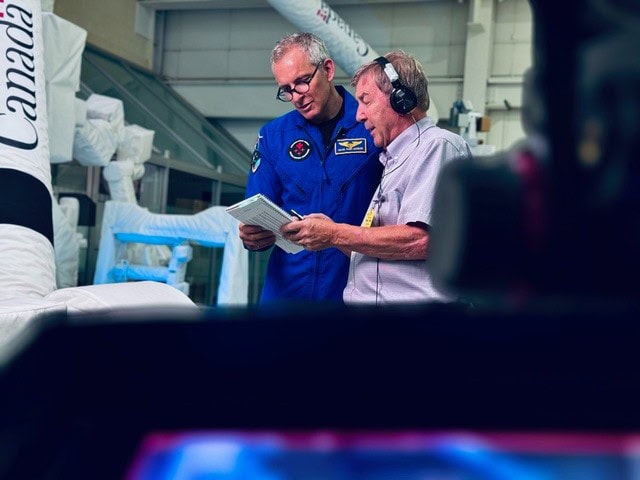
Like many in the audiovisual industry, the 76-year-old baker-turned-filmmaker (he has a smorgasbord of Food Network successes under his belt) has major concerns about AI, including job losses, deepfakes and intellectual-property theft. But, also like a growing number of industry players, his interest has been piqued.
Northern Star’s story takes place between 1870 and 1920, and Versteeg says it was challenging to find usable images from that period.
“We tried to find everything we could online,” he explains. “We paid for archive photos whenever the price was reasonable, but some sources charge up to $2,500 per photograph. Expenses in that range were out of the question in light of our very limited budget.”
AI Provides More Bang for Your Buck
Beyond the financial considerations, Northern Star’s team had to recreate 19th-century settings like darkrooms and period kitchens. That’s when they turned to AI, but very carefully. They didn’t want to, for example, end up with a modern chrome sink in a 1800s home, as AI initially proposed.
While AI isn’t perfect, one thing is undeniable — it saves a great deal of time and money.
“When we launched our company in 1982, we had a wall full of equipment, including a $45,000 camera. And we had to reinvest at huge cost every four years or so,” recalls Versteeg. “Most of our equipment today is rented. Two computers are all we need. I just ordered a phone that does the job 100 times better than my old $45,000 camera. Technology keeps advancing.”
Space Pirates Unearths AI Treasure
Toronto-based production company Space Pirates has taken AI even further. Founders Renée de Sousa and Will Cyr have been AI devotees for years. Naturally curious, Cyr quickly realized his job as an editor would be one of the first threatened by the technology. Rather than accepting his fate, he decided to learn as much as he could about what the new AI tools can do, and then use them.
“When we saw AI coming, we thought, ‘Wow, this is going to change everything,’” recalls de Sousa. “Being artists ourselves, we had serious concerns about AI’s impact. On the other hand, it’s a Pandora’s box and once it’s opened there’s no going back. So, if we don’t understand what it can do and how to use it, we’ll be left behind.”
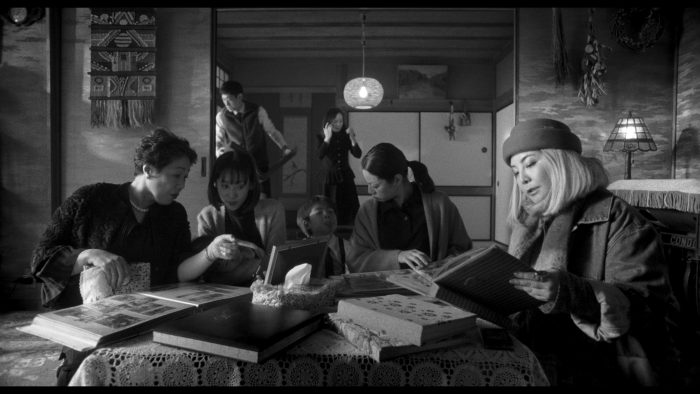
Cyr and de Sousa found the ideal project to start integrating AI into their creative process — Rebelles, a French-language animated series for youth that’s funded by the CMF and broadcast on TFO. Fast-paced and lighthearted, the series presents portraits of courageous women who shaped their eras.
“So, we thought it would be okay to be rebellious if we used AI on the Rebelles series,” de Sousa says. “Since the series is about pioneers, and AI is new technology, we thought, why not give it a try?”
The show’s animation consists of photographic collages that require numerous hard-to-find images. For Episode One, about the Desloges sisters, for instance, there were only three known photos of the two Franco-Ontarian teachers who took a courageous stand against forced English assimilation. In other cases, photos of the women featured in the series simply didn’t exist.

The studio used AI to create the subjects’ faces and bodies at different ages, from different angles, and in various contexts. But contrary to popular belief, creating AI images is not like magic. “There’s a great deal of trial and error involved,” de Sousa says. “It takes a huge amount of patience and experimenting.”
The small team working on Rebelles could try 30 to 50 different versions for each image, combining different software and generative AI tools, including the Adobe suite, OpenAI, Gemini, Midjourney, Kling AI and Runway. As the technology evolves, their toolbox expands.
Despite the amount of work, Space Pirates comes out way ahead by using AI. At this stage, about 95 percent of the images in Rebelles are AI-generated. Cyr then animates the images to infuse them with the series’ style and originality.
More Producers and Educators Exploring AI
Like with Rebelles, Casadel Films used AI to animate archival footage for Crimes du Nord, their new documentary series for Historia (the History Channel’s French-language counterpart), about the history of organized crime in Montreal from the early 20th century to today.
Other producers are using AI to correct technical glitches, manage shooting schedules or write episode summaries.
Whether the stakes are economic or artistic, AI is pushing educational institutions and broadcasters to get on board.
Montreal’s Institut national de l’image et du son (INIS) now offers courses that introduce students to the technology. Télé-Québec is creating the first episode of the animated series Lotus et Cali entirely with AI. The episode will not be broadcast on television but instead will be used as a teaching tool in Quebec schools. And, while the Canadian Film Centre does not yet offer a course in AI, it is exploring the technology’s potential via conversations and workshops about how AI can enhance storytelling, production and audience engagement.
A Line That Shouldn’t Be Crossed
For Versteeg, there’s still a line that shouldn’t be crossed. “You should never, ever replace human characters with AI,” he says. “Please, let’s never go there. It’s frightening when you see the possibilities already. I can understand AI being used for special effects, like in a scene of someone jumping off a building, but never to completely replace human actors.”
“We’re still talking to humans, after all,” says de Sousa. “It takes real creative vision to develop characters that speak to people and have soul, and to tell a story that holds up and touches us emotionally.”