The Mi’kmaq man behind the “Bon Cop, Bad Cop” series
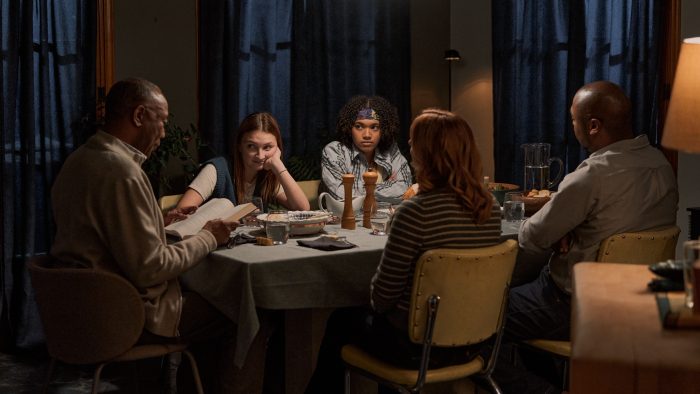
After two hit films, the Bon Cop, Bad Cop franchise comes to TV in a six-episode series, partially shot in Gesgapegiag with the Mi'kmaq First Nation community. Meet Mi’kmaq screenwriter Quentin Condo, who inspired his friends Patrick Huard and Anik Jean to tell this particular story, and helped them get it right.
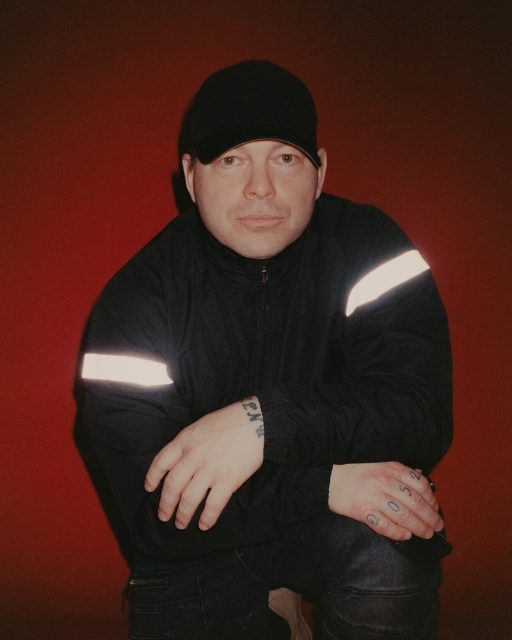
To find the source of the new Bon Cop, Bad Cop TV series, you have to act like a salmon and swim upstream. Specifically, to the Cascapédia River, which flows into Chaleur Bay, between Maria and New Richmond, on the Gaspé Peninsula, or Gaspésie.
It’s there, while learning to fish, that director/singer Anik Jean came across an old classmate, Quentin Condo, a Mi’kmaq Nation artist who was working as a fishing guide. Jean and Condo crossed paths while attending secondary school together in Bonaventure but they didn’t really know each other. Over time, during the summers, they developed a strong friendship. And since our friends’ partners often become our friends, Condo and Jean’s husband, Patrick Huard, star/writer of both Bon Cop, Bad Cop movies, also got along extremely well.
It was while fishing, and sometimes sipping scotch, that the idea of creating a Bon Cop, Bad Cop storyline that takes place in the neighbouring Gesgapegiag community emerged. “We started talking about it 10 years ago, after the second film,” says Condo, now 47, at a café in Quebec’s Eastern Townships.
“Patrick and I clicked as friends, but he didn’t really know the people in our community,” Condo recalls. “When I told him what was happening, he asked questions and said it would be cool if, one day, we did a Bon Cop, Bad Cop with a First Nations plot.”
Knowing How to Navigate
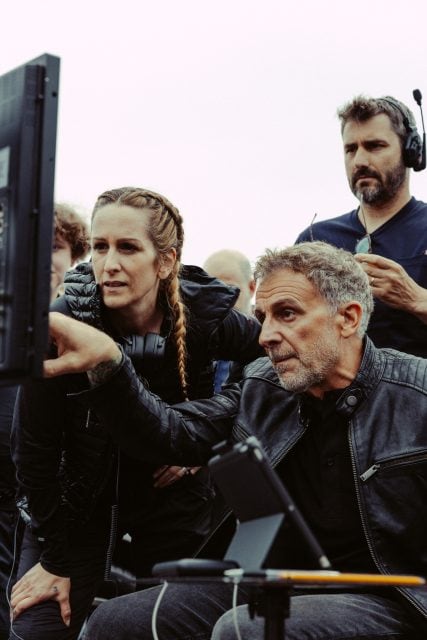
Much water flowed downstream before the creative team finally got a bite. Then, about two years ago, the telephone rang. The project was going to move forward with financial support from the Canada Media Fund. First hired as a consultant, Condo quickly joined the writing team and later helped with casting and scouting locations.
For the idea to work, it needed to have the full approval of the First Nations peoples, including in Gesgapegiag. The son of a former chief and himself the former vice-chief of the area, Condo became a key player in the project’s success.
“The first thing we did was meet all the Quebec chiefs,” he says. “There are 43 communities in the Assembly of First Nations Quebec-Labrador (AFNQL). I called Ghislain Picard, [who was then] the regional chief for Quebec. I wanted to be sure everyone was in agreement, because we wanted to have an AFNQL scene in the series. I wanted everyone to have a role, and I didn’t want to have any problems with any other nations.”
Condo then went to Gesgapegiag to get the green light from council and go door-to-door through the community to make sure its members were behind him. “That’s how it works. You have to be really open because if something doesn’t work, everything can shut down.”
He quickly felt the community’s enthusiasm.
“I thought it was going to be more difficult, but they were really happy to participate. Bon Cop, Bad Cop is very well known with the First Nations peoples. Patrick didn’t know that. There are several Mi’kmaq guides on the river, and everyone knew Pat. He saw the potential to do something with our community.”
A Nation in Action
Any good screenwriter’s first concern is that their story is believable. And when a franchise rests on clashes between cultures — like the Bon Cop, Bad Cop franchise, which was initially about the clash between Canada’s French and English cultures — it’s essential that everyone recognizes themselves.
“The most important thing for me was that the dialogue was as Indigenous as possible,” says Condo. “We have ways of saying things, a different style, like the Quebecois compared to other Canadians. We say a lot with silence. If a Quebecois person doesn’t like something, you’ll know it right away, but that’s less so with the Indigenous. They’re just going to respond with silence. We call that the ‘silent no.’”
Truth is also relayed through performance. There were close to a hundred Gesgapegiag Mi’kmaq people on set, who brought their community to life on screen with pleasure and pride. Many had never acted in front of a camera before, but according to Condo, finding good Indigenous actors isn’t difficult because they’re born storytellers. The hard part is choosing who to cast.
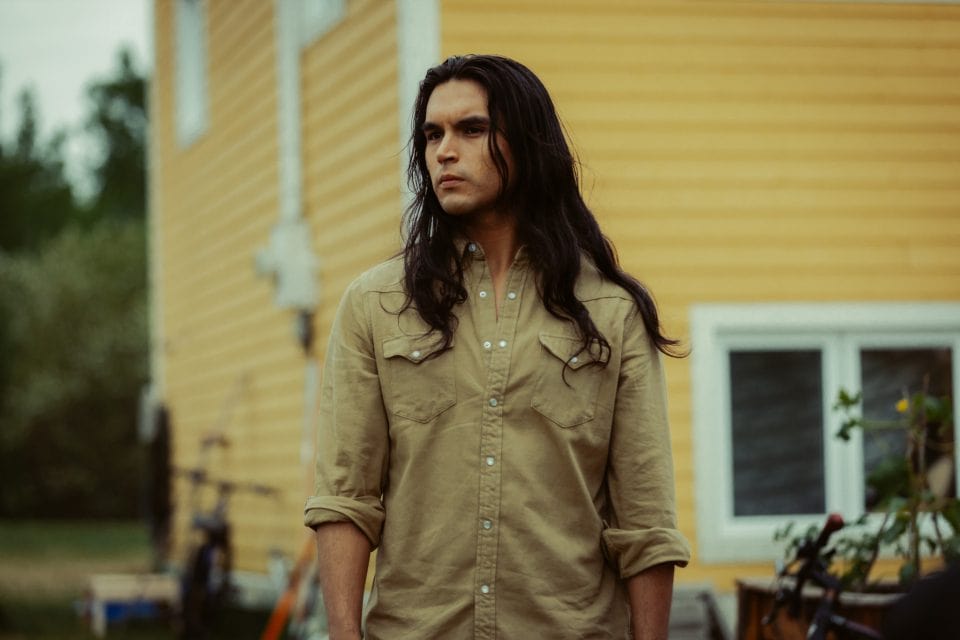
Prominent Quebecois actor Joshua Odjick (It: Welcome to Derry), from the Kitigan Zibi Anishinabeg Nation, near Maniwaki, stars as the Gesgapegiag police chief opposite Patrick Huard, Henry Czerny, Christine Beaulieu and Sarah-Jeanne Labrosse. Nathaniel Arcand from the Plains Cree, who’s had success in both Canada and Hollywood, also plays a role, as does Condo’s son, Liam, who has acting experience.
“We’re starting to see a lot of Indigenous talent, actors from everywhere,” says Condo. “For people from the community, it’s natural to become actors. They’re so good, it’s incredible!”
Changing the World, One Project at a Time
Having a collaborator like Condo is a precious asset for a production team, but not all projects are so lucky. That’s when creators turn to the Indigenous Screen Office (ISO).
“The ISO is pleased to see the audiovisual sector making use of available resources to collaborate in meaningful ways with First Nations, Métis and Inuit communities,” says Jean-François D. O’Bomsawin, ISO’s Director of Marketing & Communications. “The publication On-Screen Protocols and Pathways serves as a reference guide, accessible to all on [our] website.”
In the Eastern Townships, productions can also consult the Gaspé Film and Television Council. As a member of the group’s board of directors, Condo is familiar with the impact a series like Bon Cop, Bad Cop has on the region, which he estimates to be approximately $600,000 — a significant contribution for hotel and restaurant owners and other retailers, especially in the off-season.
Condo continues to advocate for his people and his culture, as he did when he was vice-chief, but he does it differently today. When he’s not collaborating on collective projects, he’s showcasing his talent, social activism and Mi’kmaq heritage on stage as a hip-hop singer under the pseudonym Q052. “With the arts, we’re able to change the world,” he says. “Not necessarily with politics. Artists possess a truth that politicians will often conceal.”
Although he now lives in Hatley, in Quebec’s Estrie region, having followed his partner there, Gesgapegiag will always be his true home. (“Mala,” he says, his hand on his heart. It means “where I’m from” in Mi’kmaq.) In mid-April, the production rolled out the blue carpet in Gesgapegiag for an advance screening of the series that will be available to all on Crave starting May 7.
Condo is delighted that, all over Canada, audiences will be able to see his community from the inside, demystifying what happens there, giving a peek into various families (often large ones) so viewers can better understand their reality and the way they view society. All while entertaining people.
“We live in the same country and rarely speak to each other,” notes Condo. “I think in the end, the series shows more of the things we have in common. That’s what’s fun. We realize we’re all human beings, and we all have the same emotions.”