Despite strong headwinds and rough seas, the Atlantic provinces continue to create
Far from big Canadian cities, the audiovisual industry in Canada’s East navigates with limited financing, training and distribution infrastructure. But the region’s creators persist by relying on their communities, festivals, international co-productions and, above all, their proud, singular voices.
The Atlantic provinces certainly don’t want for talent. Take the film Sk+te'kmujue'katik (At the Place of Ghosts), directed by bretten hannam, a Nova Scotia filmmaker. After its world premiere at the Toronto International Film Festival (TIFF) in September 2025, the Canada/Belgium co-production, which explores Mi’kmaq and Two-Spirit realities, screened at the Atlantic International Film Festival (AIFF) in Halifax, where it received the Gordon Parsons Award for Best Atlantic Feature.
This achievement wasn’t easy, as the region’s creators have limited resources compared to the country’s large urban centres. International co-productions, as was the case for this film, can sometimes mitigate this scarcity. Such co-productions provide larger budgets, new audiences and wider visibility.
Chrissy King-Lopes, industry programs director at AIFF and leader of the AIFF Partners (the festival’s co-productions market), is very familiar with this situation. “Co-productions are what we specialize in,” she says. “Our festival allows the folks that are looking for these co-production partners to meet and talk about their projects.”
We met with King-Lopes, as well as other filmmakers and thought leaders from Atlantic Canada’s screen industry, at three of the region’s notable festivals last fall — AIFF, Lunenburg Doc Fest, and the Festival international du cinéma francophone en Acadie (FICFA) — to understand how the industry survives, despite facing such strong headwinds.
Related: Our video series, East Coast in Focus
Swimming upstream
Like everywhere, the Maritime region is subject to rising production costs and the surge in streaming platforms, as well as a scarcity of greenlights for their projects. But these factors only add to other long-existing pressures.
Educational, provincial broadcasters are absent in the region, in contrast to Quebec, Ontario or British Columbia, where Télé-Québec, TVO, TFO and the Knowledge Network can be counted on. “This lack is particularly felt for the documentarists,” says Julian Carrington, executive director of the Documentary Organization of Canada (DOC), who was attending the Lunenburg Doc Fest for the first time.
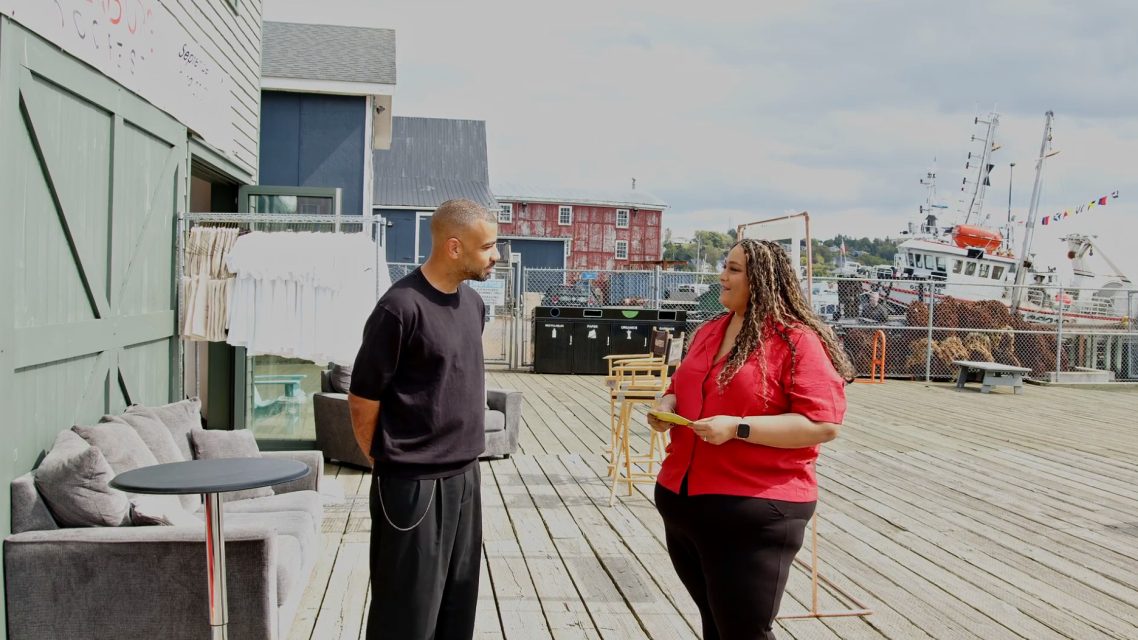
“These broadcasters are key players in the documentary space elsewhere in the country,” continues Carrington. “So it raises the question, how do we address that gap and ensure that creators in the Atlantic region are able to work with broadcasters that can help them build the budgets that they need to tell these stories?”
The inequity is also felt by francophone communities outside Quebec, like in New Brunswick.
“We don’t have all the financial structures to support a budget as we would in Quebec because there’s no equivalent of the Society for the Development of Cultural Enterprises [SODEC],” says director/screenwriter Julien Cadieux at FICFA in Moncton. “Even the regional institutions are less expensive.”
He does welcome the agreement signed by Telefilm Canada in 2025, which promises to allocate five percent of its francophone-content budget to productions outside Quebec.
While in Moncton, we also met with Acadian filmmaker Phil Comeau at his home. Sitting in his kitchen, he talked about how few feature films have been made in Acadia over the past 50 years. “I feel like the financial backers are now realizing that we, too, have enough actors to tell good stories,” he says.
Comeau is concerned, however, by the lack of provincial financing, which slows the industry’s development in the region and pushes creators to leave New Brunswick in the slower months due to lack of work.
Festivals as regional pillars
Though opportunities to meet financial backers and distributors are rare in the region, local festivals offer access to representatives of organizations like Radio-Canada or the Canada Media Fund. And, in contrast to larger festivals like TIFF, these events are intimate, and so better for this type of meeting.
“It's important for the Atlantic-Canadian filmmakers to gather, because it's a diverse and spread-out region,” says Walter Forsyth, festival director at Nova Scotia’s Lunenburg Doc Fest.
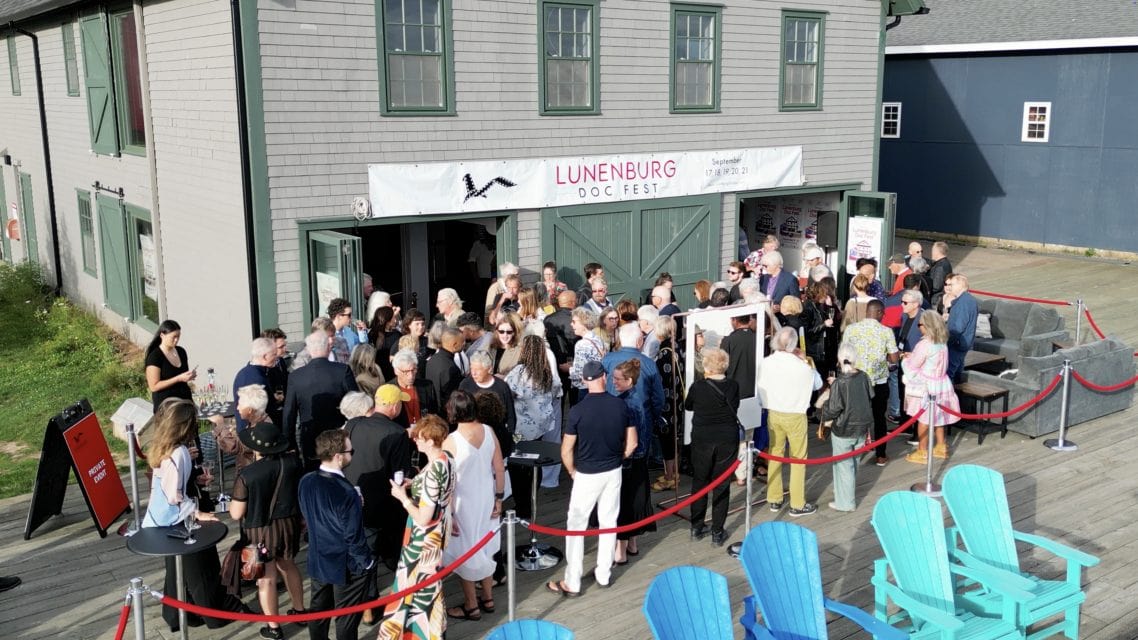
Certain festivals, like FICFA, also serve as a learning ground for emerging filmmakers. “There’s no francophone training program in cinema at a college or university level in the New Brunswick region,” says Mélanie Clériot, FICFA’s director. “And so we serve as some sort of a solution by offering development opportunities, programs, producing projects, etc.”
Thanks to FICFA’s Short Film Assistance Program, Haqq Brice Adéoyé, a multidisciplinary artist based in Moncton, was able to adapt one of his slam poems for the big screen. His film C’est La Nature! La Solution (Nature is the Solution!) screened at the festival this year. “The audiovisual dimension develops the story of the slam further, and adds to its impact,” says Adéoyé. “That’s why I gravitated towards film, to better share my point of view.”
Building a network differently
Creative communities on the East Coast may be smaller or more spread out than those in the big cities, but they are unified.
During a chat at the Halifax Public Gardens during the AIFF, Nova Scotia filmmaker Stephanie Joline talks of less competition, more mutual aid, and an honest desire to celebrate each other’s success. “That's how I started in the industry; working for free on my friends’ short films, and they worked for free on mine,” she says. “And then we all developed those skills together.”
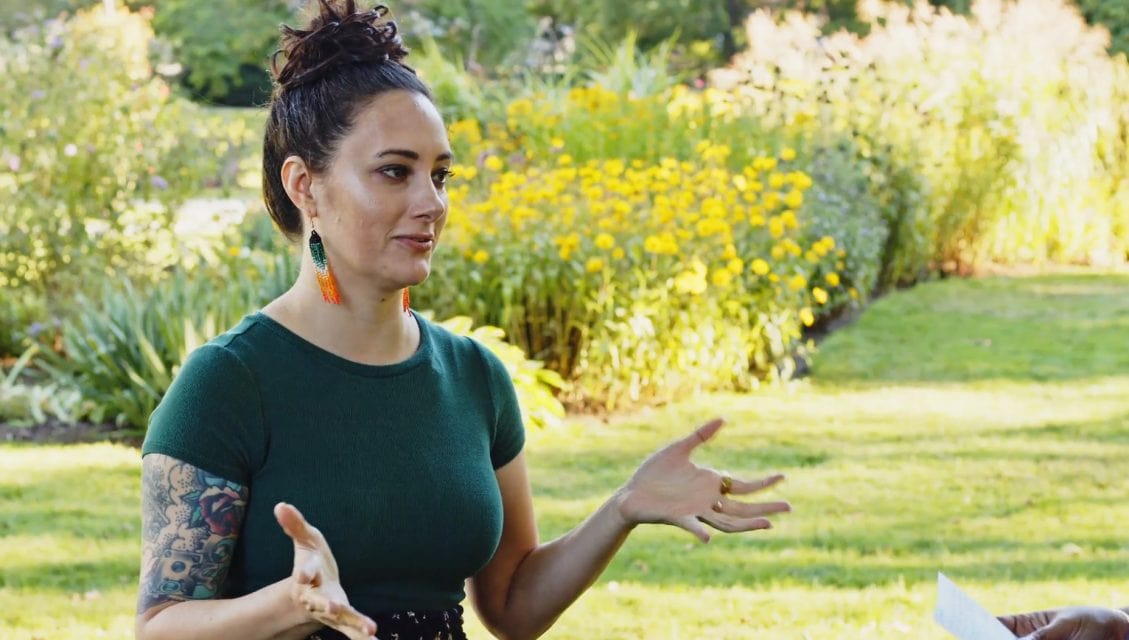
Erica Meus-Saunders, filmmaker and executive director at the Atlantic Filmmakers Cooperative (AFCOOP), an inclusive community organization that supports emerging creators, agrees. “Because it’s a smaller community people are so much more invested and invested in you. Once people get to know you, and see that you’re serious and invested in community, everybody comes forward,” she says.
More than regional voices
The creators we spoke with think the region’s geographic position contributes to the uniqueness of its stories. But when it comes to funding, they’re still coming up against significant barriers.
“Our point of view on the world is perhaps not as popular, because we fit into a ‘regional content’ box for a distributor. However, as Acadians, we can also have our point of view on the world,” says Cadieux.
“It’s important for me to show many versions of Acadia,” the filmmaker says. “Yes, you have to protect the Acadian language and culture, but it’s seeing how we can reimagine Acadia. What is the Acadia of tomorrow?”
The Atlantic Canada of tomorrow
New voices are being heard, including that of Shayne Michael, screenwriter from the Madawaska Maliseet First Nation, who’s behind Enfant de méduse, Wolastoqey, a Tou.tv series that explores identity, racism and homophobia. “I never saw a series that was both Wolastoqey and Acadian. I said to myself, finally, we’ve made one,” says Michael, a few hours before his series premieres at FICFA.
Provincial support is crucial to produce more films and series like Michael’s, but it remains scarce in the region.
Newfoundland and Labrador seem to be an exception. “We generate and attract about $100 million in production annually, with a population of just 500,000,” says Laura Churchill, CEO of PictureNL, the province’s official film office.
Related: For St. John’s, good things come in threes
Thanks to industry support programs in Newfoundland and Labrador, including a tax credit that covers 40 percent of eligible production fees, the province also attracts projects from elsewhere.
It’s a model other Atlantic provinces are watching from afar, waiting for their own governments to follow suit.