With ‘Nish’, Julie O’Bomsawin gives Indigenous youth TV a big boost
Abenaki producer Julie O’Bomsawin and her production studio Kassiwi Média deliver their very first Indigenous series for youth, Nish. O’Bomsawin tells us why she’s so proud of this ambitious project and explains the challenges of getting it made.
Upon graduating from L'Université du Québec à Montréal, better known as UQAM, in the early 2000s, Julie O’Bomsawin had a clear goal in mind. “I always say I do what I do out of respect for those who came before me, and to create a path for future generations,” shares the producer from the W8banaki of Odanak Nation. After graduation she kept thinking about her grandfather’s stories, which reminded her how laws and discrimination had smothered Indigenous identities and cultures for decades.
To give voice to those stories, she chose a path rarely travelled by people from her community: cinema and television.
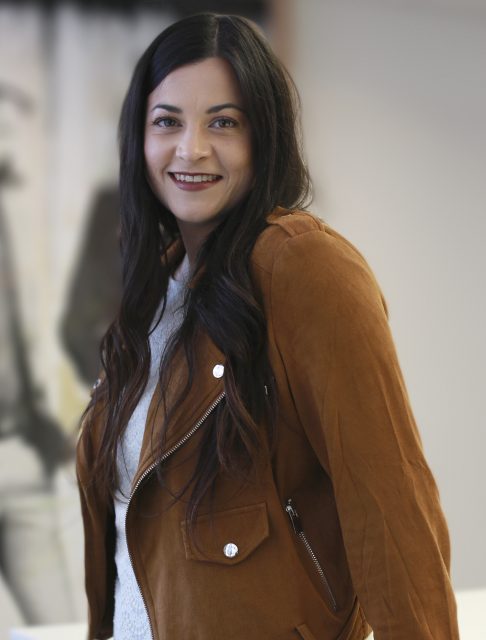
After working as an assistant director and script supervisor on numerous projects, in 2015 O’Bomsawin started her own production company, Kassiwi Média. “The reason I became a producer wasn’t to produce, but because there were stories I wanted to see on screen that I didn’t see,” she says. “And so I thought, what could be better than producing them myself, allowing them to come to life?”
After producing a few documentaries and her first feature film, Captain, released earlier this year, O’Bomsawin is proud to release her most recent production, the youth series Nish. Financed with support from the Canada Media Fund, the series is available on September 22 on Tou.tv, with dates for Radio-Canada and the Aboriginal Peoples Television Network (APTN) to follow.
Focusing on Indigenous kids’ daily lives
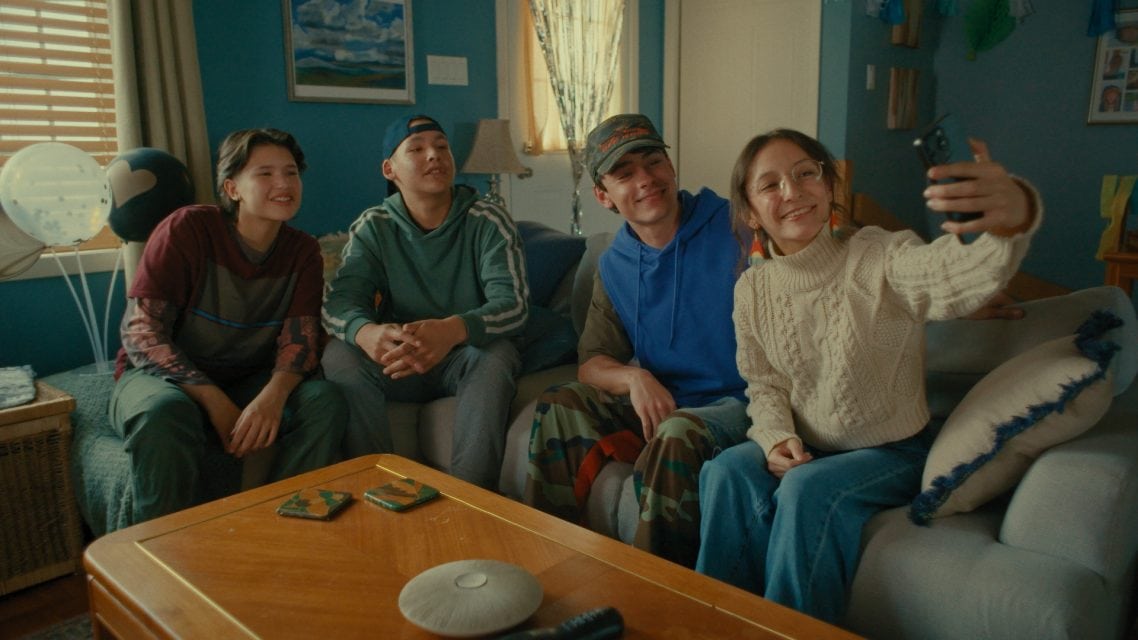
Adapted from a series of novels by the Wendat author Isabelle Picard, Nish means “two” in the Innu language. The show recounts the lives of twins Éloïse and Léon, who live out in the middle of nature in Matimekosh, in Quebec’s Côte-Nord region. The title also refers to their two Indigenous identities, as their father is a local Innu man, while their mother comes from the Wendake community in Quebec City.
“We don’t see a lot of these young people in Indigenous series, at least not in Quebec,” says O’Bomsawin. “I think it’s important, because it’s an age where identity forms. I see this adolescence as being quite radiant. These are young people dreaming to the beat of the area’s rhythm, playing hockey, experiencing their first loves, friendships, school, like all young people today.”
The challenges of shooting in the Innu language and community
O’Bomsawin is particularly happy that, while the series was shot in French, 20 percent of its dialogue is in the Innu language, a first for Quebec television. (APTN will present a version entirely dubbed in Innu.)
For the production to come together, they had to overcome several obstacles, starting with casting. It was impossible to imagine non-Indigenous actors playing the roles, so the team had to do a lot of groundwork. After hosting general auditions over video, the team went to Côte-Nord in search of potential actors. They decided to cast young Jean-Luc Shapatu Vollant and Emma Rankin, both originally from the region, to play the two main characters.
“The real challenge for a series is to have all these wonderful people become a family,” explains O’Bomsawin. “And so, before shooting, we got them together not just for a general rehearsal, but to create an opportunity to meet each other. When people have less experience you need to be sure the chemistry works. Everyone has their strengths, and things they have to work on so the series is believable and touches people.”
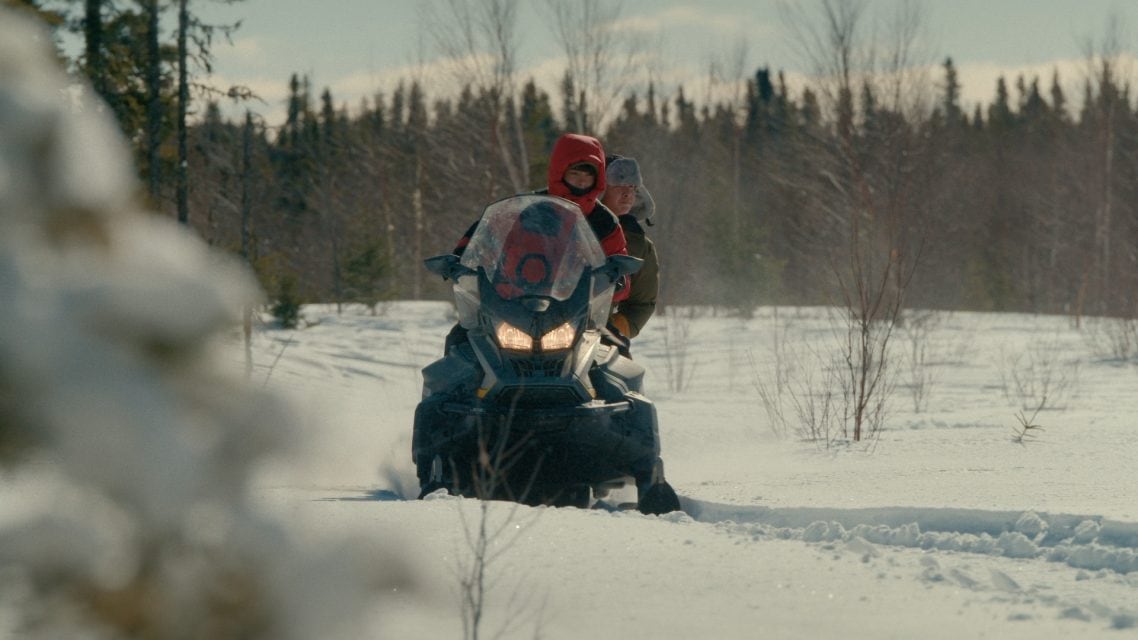
Another challenge was the distance. As the majority of Indigenous communities are in distant areas, shooting on site quickly increases production costs. Since Nish was filmed in Matimekosh, Pessamit (near Baie-Comeau), and Wendake, the financing was complicated, even before you consider that part of the story takes place in snow. You have to be open to compromises, like operating with a smaller team.
The process was long, but O’Bomsawin kept the faith. “At the beginning of the project so many people said to me, ‘How are you going to do it?’ And I said, ‘Well, we’re going to do things one step at a time, and we’ll get there.’ It’s important this series exists, that it has an impact, and that young people can watch it and recognize themselves.”
Training the next Indigenous wave for the TV industry
While applauding recent advances in the quantity and quality of Indigenous content, O’Bomsawin is conscious that, more than ever, TV production requires unyielding passion. That’s why she committed herself to the industry, to facilitate financing for stories both fictional and documentary. She firmly believes in the strength of the collective, and the path she’s chosen.
“Television is powerful. It’s an exceptionally strong medium because you can stumble onto us without having planned to watch. When we enter into people’s living rooms, when they pause on a project we made and we move them with a story, I find something incredible in that, in our ability to understand each other.”
For her, production is a true calling. It allows her to reflect contemporary Indigenous realities, and also to amplify voices, allowing artists from the First Nations, Inuit and Métis people to gain experience.
“I’ve never counted my hours,” she says. “When I founded Kassiwi Média I was the only First Nations person on the team. I built from the ground up and the goal is for us to grow. Kassiwi means ‘together.’ So I try to train up the next wave to the best of my abilities so the pool of Indigenous professionals grows. My dream is for there to be a full Indigenous team one day. It’s not possible yet, unfortunately, but we’re working hard on it.”