Mayumi Yoshida’s Akashi captures love, memory and loss in a time capsule of Japanese-Canadian identity
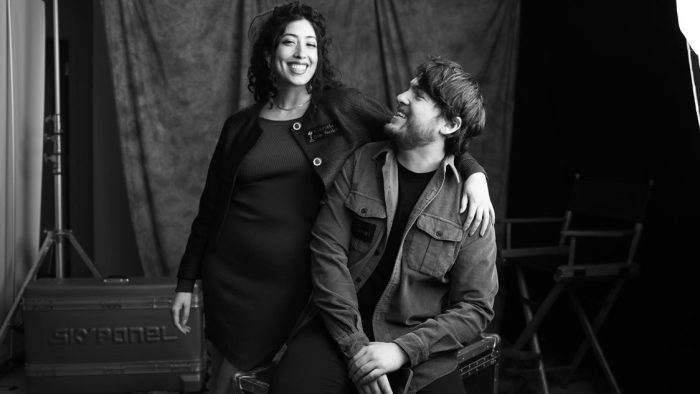
Akashi premiered at the Vancouver International Film Festival earlier this year, where it won the audience award in the Northern Lights series. We talk with the film’s writer, director and star Mayumi Yoshida about making her feature-film directing debut with this very personal story.
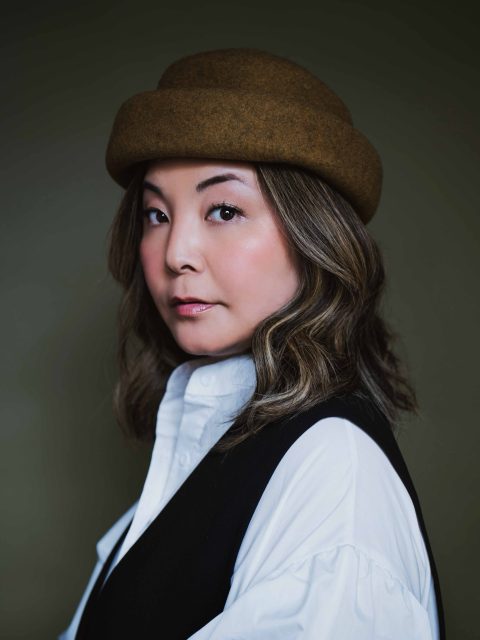
“All my life, I’ve had this fear of forgetting,” says Mayumi Yoshida over a Zoom call. “There’s a part of me that’s scared of letting go and saying goodbye, but it's just the nature of life. We have to move on.”
The Vancouver-based actor, writer and director has always sought to remember and document the world around her. Now, she’s tapping into her own history for her powerful feature-film directing debut, Akashi, which premiered at the Vancouver International Film Festival in October, where it was named the audience favourite in the Northern Lights series. Akashi subsequently won Best First Feature at the Toronto Reel Asian International Film Festival and the Borsos Award for Best Canadian Feature at the Whistler Film Festival.
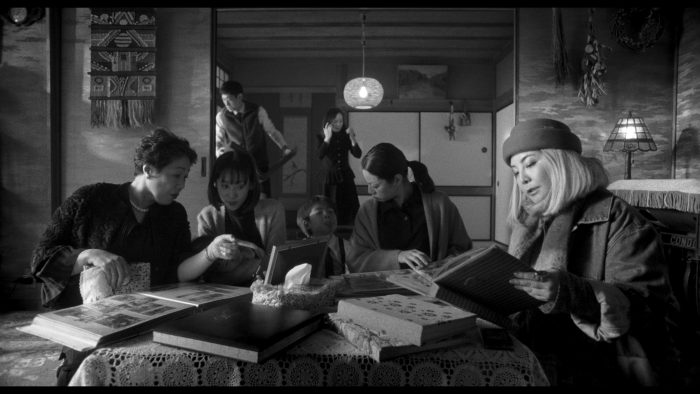
Loosely based on Yoshida’s own experiences, the autofictional story follows Kana (played by Yoshida), a Vancouver-based artist whose return to Japan for her grandmother’s funeral quickly transforms into an intimate journey through identity, love and loss. While navigating grief with her family, Kana uncovers a secret about her grandfather and simultaneously reignites a spark with her ex-boyfriend. The film’s dreamy effects blur the past and present as Kana’s current experiences, her childhood recollections and her grandparents’ past are all woven together as she grapples with the many definitions of love.
Yoshida has been working on this project for about 10 years — first as a play, then as a short film released in 2017, and now this feature film which received funding from Telefilm and the Canada Media Fund.
The film shifts between black and white for Kana’s present day, and rich, saturated colour for the scenes recalling Grandpa’s life. Why did you make that choice?
I wanted Kana's modern-day struggle to feel like a classical, timeless struggle. It’s actually [about the] crisis of identity and belonging and missed connections with people who may have been the person in your life. It might not seem so big compared to the [grandfather’s] decades-long love story, but when you're in it, it's such a big deal. By stripping down the visuals and the colours we’re more focused on the story. And I love how black-and-white cinematography, with its shapes and shadows, all reflect Kana’s fear, dread and unease. Modern-day Tokyo in black and white is also something that I wanted to show more because Japan is often heightened to the crazy, beautiful neon light and stimulation [rather than] the energy that keeps it grounded.
For Grandpa’s memories, I wanted to go into a saturated, magical-realism place because when we look back at days where we felt like it was the best time of our lives, it feels very vibrant, as if it's infused in nostalgia. We only have fragments of those memories, but we remember the sensation and relive these memories through his experience.

You use both symmetry and stillness in the film’s visual structure. Why?
I really like symmetry, but I also like when the camera is simply observing, because that's inspired by [Japanese directors] Ozu and Kore-eda. There's no forced movement from the camera, and we get to observe the character move around in the space. In that family home, you get to experience the absence of people and the presence of people. Even in the same space with different eras and different people, it just infuses so much different energy. And I think that's also the beauty of the passage of time. I wanted to represent how life just keeps going, you know? There's no way of stopping time, but there are some things you can hold onto, some things that'll be eternal, and some things you let go that just pass by. And that's okay.
The movie has beautiful textures, such as the patches on Kana’s coat. Were you using texture as a sensory replacement for colour?
I love fashion, so I felt like Kana, who is an artist, would have a clear taste in what she likes…. [Her] jacket is made out of six different denims, and it’s so heavy. Our incredible costume designer, Tammy Joe, had this great idea about making this jacket — what if we made this jacket out of all these pieces? Because [of] denim and its representation of Canada, but it's patched with different things because Kana is multidimensional, she is multicultural. There are so many aspects to her that are all stitched together.

This project went from play to short film to feature film over 10 years. How did Kana evolve in that time?
My character, Kana, did grow as I was growing as a filmmaker and as a woman. I first wrote the draft back in my early 30s, so the struggles and the concerns that I had at that time, versus when we were shooting in my mid-30s, were different. I kept updating Kana to where I was [in life], but when I was 35 I realized that I needed to stop Kana's growth and let her stay there. So that was really great to detach myself from the character as well.
What have you learned about yourself as a storyteller and artist?
Through writing and directing I realized I have a special perspective that I can bring to anything that I tell. The more I kept telling stories and taking [the film] to festivals and hearing audiences' responses, [the more] I realized that it's unique, and that’s a way to connect with so many other people. So that's really rewarding.
What new themes or projects might you be drawn to in the future?
I’m really drawn to intersectionality. I really love it because I think I live in the in-between space. I always loved to mix up different things and put them in a place where, seemingly, they're so different, but they're so similar. I love those kinds of themes. As of now, what I have in my mind is something that's set in Japan because of my heritage, but I'm always interested in themes like that where we're mixing different cultures, different generations and seeing it through the gaps.