Sasha Leigh Henry is done waiting for permission
We talk with the filmmaker about building a DIY release for her micro-budget debut feature, Dinner with Friends, creator leverage, and what self-distribution can unlock for emerging producers.
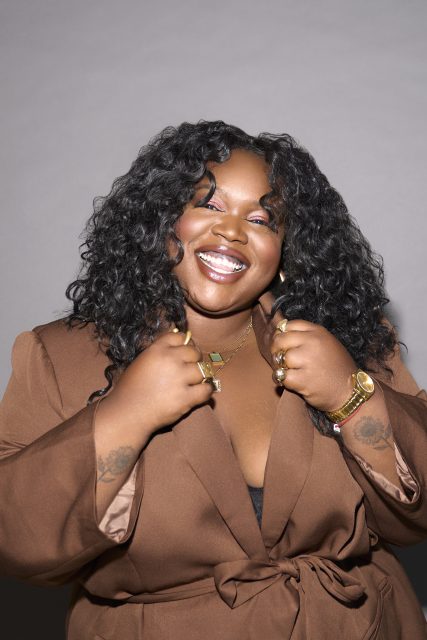
Writer, director and producer Sasha Leigh Henry knows you don’t need a huge budget to make something that matters.
In the wake of low-budget Canadian hits like Heated Rivalry and Paying for It, and the success of American Youtuber Markiplier’s debut film Iron Lung — which made more than $40 million (U.S.) on a $3 million budget — the idea of a filmmaker building their own audience, even self-releasing, has never been more relevant.
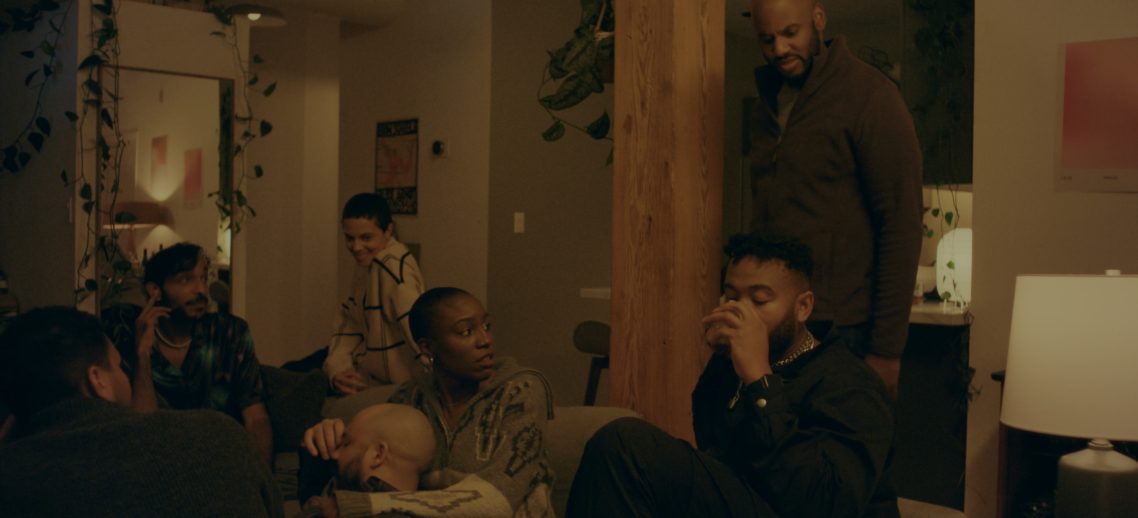
Henry’s last project, the TV series Bria Mack Gets a Life, was cancelled after one season despite winning the Canadian Screen Award for Best Comedy Series. So she was open to a different approach when making her debut feature, Dinner With Friends, about eight longtime friends in their 30s who attend regularly scheduled dinners in an attempt to stay close.
Pitched on a $100,000 micro-budget, the film premiered at TIFF, then played the festival circuit, before Henry and her co-writer/partner at Everyday, People Art + Film Productions, Tania Thompson, went direct to viewers by selling the film on their Patreon, and subsequently made a deal with Filmhub to bring the movie to additional audiences starting this month.
Bria Mack Gets a Life was cancelled after one season despite winning the Canadian Screen Award for Best Comedy Series. What problem were you trying to solve by making Dinner With Friends on a micro-budget?
First, it was creative fulfillment. The blessing and the curse of making Bria is that you could argue we hit it out of the park right out the gate, but it took four years before anyone beyond the people who worked on it and greenlit it actually saw it. That’s a long time as an artist to not be talking to an audience.
After Bria did so well critically, I was getting more television opportunities because the industry wants you to do the thing they’ve seen you do already. I have range in the kinds of stories I want to tell, and I couldn’t stomach waiting another three to four years before you’d hear anything from me again.
Dinner With Friends was the scalable project we wrote to keep in our pocket so that funding decisions would not make or break us.
The film has been framed as a $100,000 micro-budget feature, but you’ve said the final budget was closer to $200,000. Can you clarify?
We went to camera with only $100,000. We could have finished a version of the film very close to what we have for that $100,000. That’s why we led with it, because that was the bet most cast and crew were taking.
We applied for Telefilm Talent to Watch and said, if we get it, then great, our budget’s $350,000. If we don’t, we’re still making this for $100,000 and we’re going to finish it with $100,000. We already had the $100,000 beforehand between personal investment, Canada Council for the Arts and Ontario Arts Council. We did it that way because the whole point was not waiting again.
You didn’t get Talent to Watch, but you did get an additional $100,000 from Telefilm. How was that money used?
It largely went to post. It also meant we could pay some people much closer to their real rates instead of asking them to work for an honorarium with the promise of a bonus later. It also went to troubleshooting because we didn’t have a post supervisor and some things were more finicky than expected. Music was a big one too. Music alone can eat up a good 30 or 40 percent of $100,000.
You shot in just nine days. How did you keep on track?
Preparation and honesty. I think we push this myth of the staunch visionary director who refuses to compromise. On a $100,000 film, that approach will burn people out.
As a producer-director, the promise I made to the crew was that it would be challenging but not miserable, ambitious but achievable. It’s unfair at this budget level to lay out your vision, have experienced department heads tell you it can’t be pulled off for these reasons, then tell them to figure it out. If I can’t provide the resources to do what I’m asking, it’s my responsibility to adjust.
Did any of the production constraints shape the film in a way that actually made it better?
For me that’s the job of the director, figuring out how to visually tell it in a way that feels congruent with who these people are. I love this kind of movie. I love a good dinner scene.
What helped us was leaning into constraints and letting them push the creative. It’s seven dinners with a lot of the same people. So we asked, how does each dinner have its own feel and weight? What is the function of each dinner? How can we play with the camera tools we have to elevate that?
There’s one dinner sequence where the inspiration is That ’70s Show’s weed circle, but we flipped the energy. You’re seeing the group, but in isolated ways, as they start to fracture. It gives new tension to a familiar device.

When did TIFF become the target?
TIFF was a goal, but it wasn’t make or break at first. TIFF’s deadline is in May, which lines up well with a Canadian post schedule where winter is often used for editing. It gave us runway to see how far we could get and assess what we had.
By April…I felt like we had a real shot and that it fit TIFF’s language, what they like to champion. We doubled down then.
After TIFF, many filmmakers would chase a traditional distributor. You’re a filmmaker with a track record and clout, yet you chose a DIY route. Why?
We didn’t think we’d get an offer that made sense. One of the best things about making a film at this budget is that we don’t really have debt, so we’re not forced into a deal. If someone offers $20,000, and you can’t trust what the lifeline of the film will look like, that’s not compelling. We already did our trailer and a lot of our poster design in-house.
If we were going to end up not making much money anyway, having direct understanding of the data and our audience had real value, even if it taught us what doesn’t work.
What’s next for the film, and for your production company Everyday, People?
We’re building the Everyday, People ecosystem and continuing to be strategic about the film’s release. We’re working with Filmhub, so the film is going to transactional video-on-demand in February…in the U.S. and other territories. We’re also looking at subscription and ad-supported options.
Creatively, we’re writing a YA action thriller, and a two-hander romantic dramedy about an artist couple who broke up years ago and run into each other on a tourist excursion in Japan. They’re not micro-budget, but they’re still low budget by industry standards. As you move into the millions, you’re talking about investors who want to see a return. So a big focus this year is understanding film as a product in a marketplace, not only a creative entity. Part of the goal with Dinner With Friends is to learn enough to answer, credibly, how you get someone their money back. That’s where we’re headed.